
The forces shaping African art today
- By Caroline Edey van Wyk – Brand Editor, Investec
----------------------
This past weekend, 34,000 people visited the Investec Cape Town Art Fair - making it the most successful to date. This article explores the forces reshaping African art, from market recalibration to the rising influence of women and the impact of technology. Together, they reveal an ecosystem coming into its own and defining its future with growing confidence.


Last week, the largest contemporary fair on the continent, the Investec Cape Town Art Fair, opened its doors. Under this year’s theme, Listen, established collectors and first-time buyers alike stepped into the vast exhibition halls. Gallerists stood beside carefully curated booths. Artists watched closely, reading reactions in silence. Sales were made. Reputations were strengthened. New passions were likely sparked.
But what lies beneath this choreography?
In the lead-up to the fair, Investec’s Tristanne Farrell hosted a series of conversations for Art in Focus, an Investec Focus Radio SA vodcast exploring the forces shaping African art. Across four episodes, one theme became unmistakable: we are witnessing an ecosystem in transition. Not collapse. Not boom. A recalibration.
Market correction or market maturity?
In conversation with Frank Kilbourn of Strauss & Co. and Ashleigh McLean of WHATIFTHEWORLD, the discussion turned quickly to art cycles.
Frank pointed to African figuration where prices surged and demand outpaced context. As fashion shifted, works returned to the secondary market at fractions of their peak.
But he cautioned against panic. “One must distinguish between long-term trends, short-term trends and these super-heated little bubbles,” he said. Correction, in his view, is part of market evolution.
Ashleigh was equally clear about the role of the primary market. “I’ve never adjusted my prices based on what happens in the auctions,” she said. Her strategy is grounded in sustainability. “I like to play the long game. We need to think about a 20-year trajectory.”
Auction houses provide liquidity and data. Galleries build careers and context. The two are interdependent but operate on different time horizons.
Perhaps the more relevant question is not whether the African market has slowed, but whether it is stabilising. A maturing ecosystem does not chase every spike. It absorbs volatility and recalibrates.
Watch or listen to Ep 1 here: The business of art
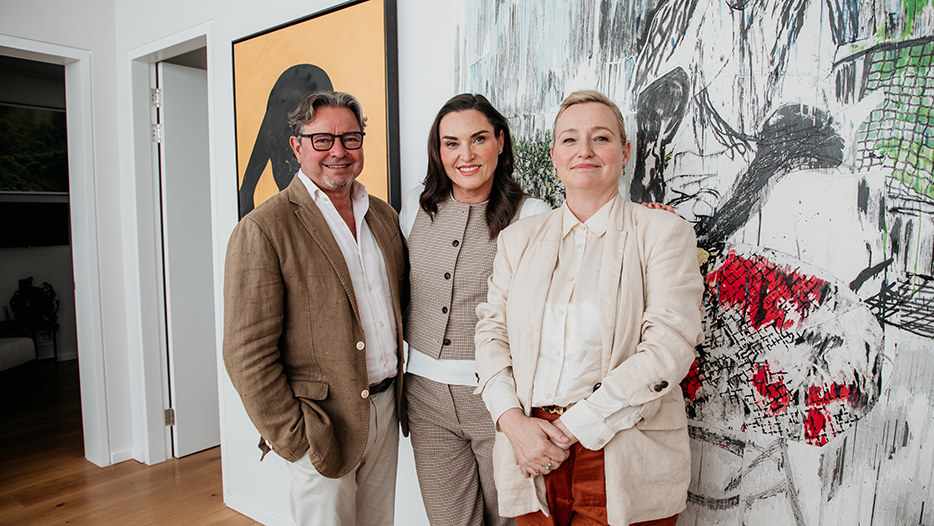
(L-R): Frank Kilbourn of Strauss & Co; Tristanne Farrell of Investec Wealth & Investment International; Ashleigh McLean of WhatiftheWorld.
Women reshaping the ecosystem
In another episode, Emma van der Merwe of Everard Read, Shona van der Merwe of Reservoir Projects, and Anelisa Mangcu of Under the Aegis reflected on the increasing influence of women across the art ecosystem.
The data supports their lived experience. According to Art Report Africa, female African artists captured a majority 52.8% share of auction sales in 2024 – a historical first. This marks not only a statistical shift but a structural one in a market long dominated by male artists.
Yet pricing disparities remain. McLean was unequivocal in her advice to collectors: “I do say buy the artwork of female artists from an investment point of view, because as a general rule their work is greatly undervalued compared to their male compatriots.” She added that collectors can often acquire “a work of outstanding quality for 30% less” than comparable works by male artists.
Beyond numbers, the shift is qualitative. Anelisa describes nurturing artists as relational rather than transactional. “Artists are people too,” she said. “You can never really get anything out of anyone without investing proper time and really understanding them.”
Shona emphasised transparency and discipline. “Paying artists on time is such an important part of trust in the relationship.”
What also became clear is that the ecosystem is more collaborative, and less competitive than assumed. Galleries refer collectors to one another. Advice is shared. “We are a community,” Emma said, not rhetorically, but practically.
Watch or listen to Ep 2 here: Women leading the way in art
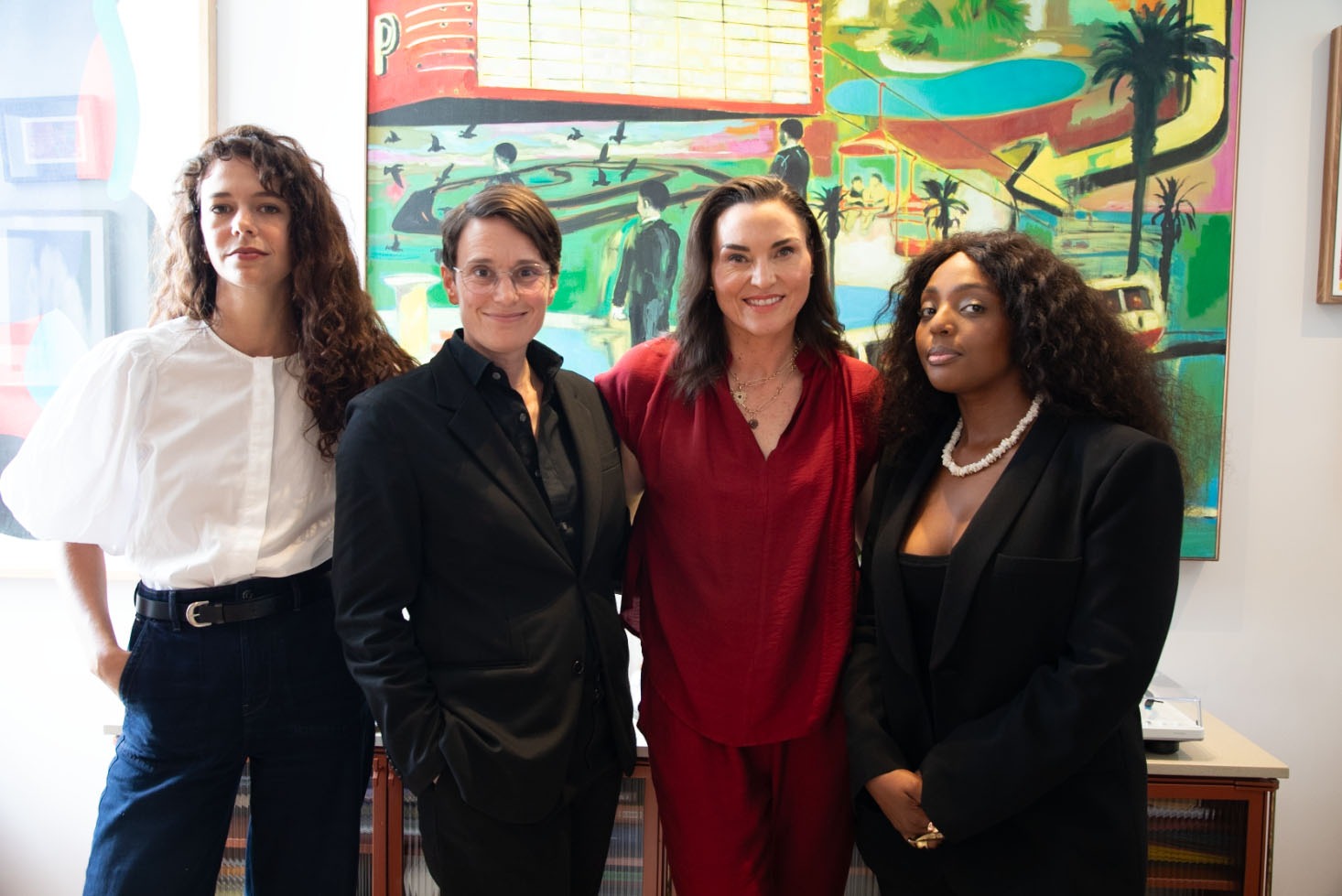
(L-R): Shona van der Merwe of RESERVOIR; Emma van der Merwe of Everard Read; Tristanne Farrell; Anelisa Mangcu of Under the Aegis.
Whose art is it anyway?
Technology has introduced new complexity into questions of originality, but perhaps it has also clarified something fundamental.
In conversation with independent curator Antonia Strauss, 131a Gallery director Brett Bellairs and rising artist Aaron Philander, who held his first solo exhibition in September last year, the conversation explored AI, studio assistants and restoration.
If a machine draws the line, who is the artist? If Damien Hirst replaces a decomposed shark, does the work remain original?
Antonia’s view was pragmatic. “From a conceptual aspect, they came up with the idea,” she said of artists like Warhol and Koons. The physical act of production does not erase authorship when the intellectual framework remains intact.
Aaron brought this debate into his own practice. Working with found objects and materials that weather and shift, he described his work as something that resists stillness. “It’s never still,” he said. “It can change.”
For him, intervention does not detract from originality. It extends it. A piece that evolves still carries its conceptual intent.
In studio practice, collaboration is not new. Assistants, foundries and technicians have long formed part of artistic production. AI may accelerate this reality, but it does not invent it.
What it challenges is our attachment to singular authorship.
Watch or listen to Ep 3 here: Whose art is it anyway?
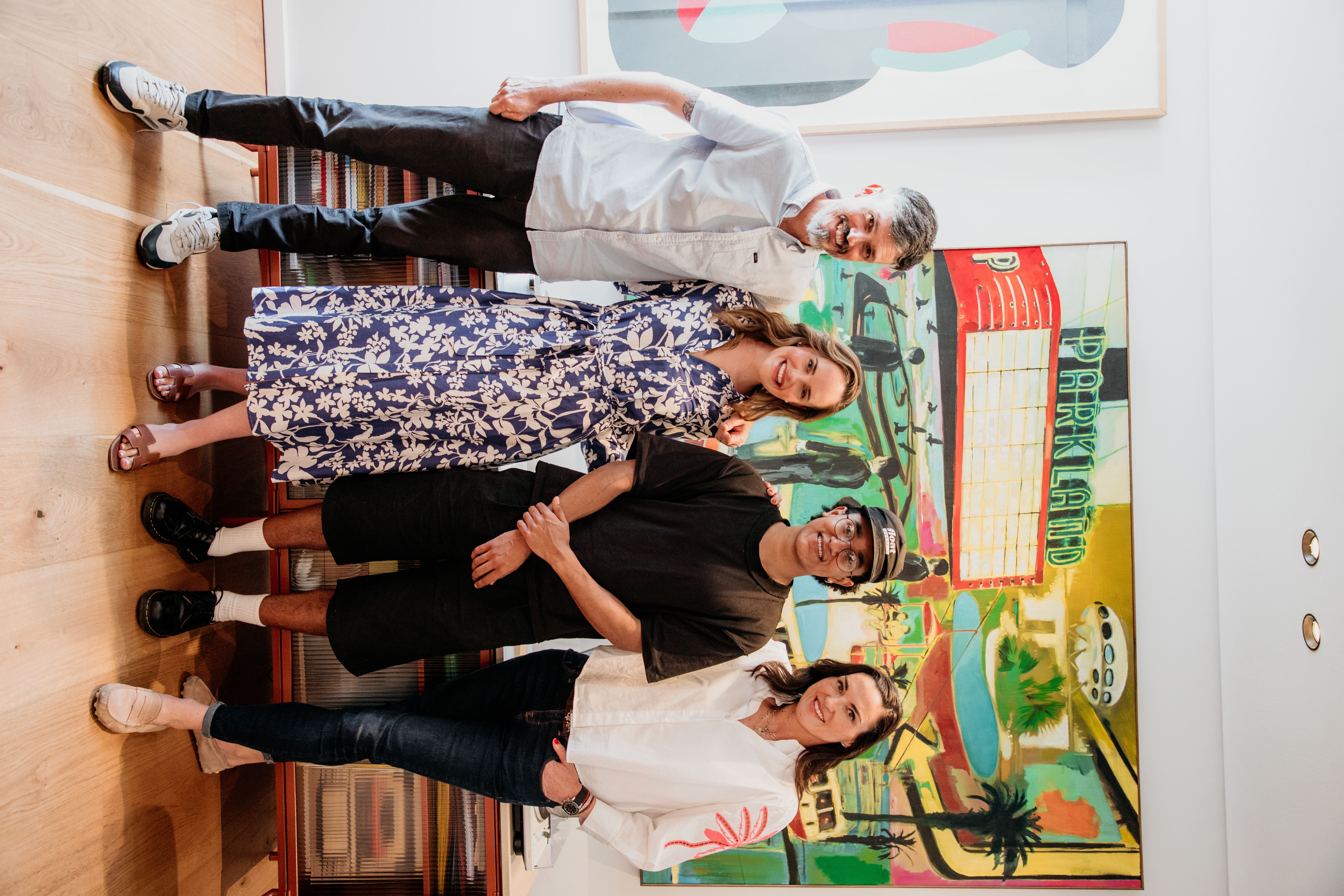
(L-R): Brett Bellairs of 131aGallery; Antonia Strauss – independent art consultant; artist Aaron Philander; Tristanne Farrell.
Identity as structural foundation
If markets correct and technology disrupts, identity remains foundational.
In episode four, artists Mary Sibande, Sahlah Davids and Leila Abrahams did not treat identity as aesthetic. They treated it as inheritance.
Mary described her alter ego, Sophie, as “a conduit in going back and forth into history, into the present and also into the future.” Through Sophie, she reframes stories of domestic workers in her family, transforming personal memory into shared recognition.
“Where is this rage coming from as a people?” she asked when reflecting on her Red Dog series. Art, for her, becomes a way to process collective anger rather than simply depict it.
Sahlah’s beadwork draws from generations of Cape Malay and Cape Muslim tailors and seamstresses. “It was a necessity,” she said of that lineage. By reclaiming those materials, she repositions domestic labour as aesthetic language.
Leila’s sculptural use of gel capsules stems from her experience with lupus. “I’m more into telling these personal stories that I hope help influence and help other people that have had similar stories,” she said. Her work creates space for vulnerability, allowing viewers to reflect on their own internal struggles and pain.
Personal memory, rigorously examined, becomes cultural narrative.
Watch or listen to Ep 4 here: Art in nurturing identity and heritage


Listening differently
What emerged from these conversations is not a singular trend, but a pattern.
The African art ecosystem is becoming more self-aware. Markets are correcting excess and stabilising. Women are increasingly shaping the demand and supply side of the market. Artists are navigating authorship in a technologically mediated world. Identity is being interrogated rather than instrumentalised.
As visitors walk through the Fair later this week, the invitation to listen extends beyond panel talks and booth pitches. It asks collectors to listen to context, not only price. To listen to process, not only product. To listen to the histories embedded in material.
Art is not static. It evolves with markets, technologies, politics and memory. It absorbs shock. It responds.
And perhaps the most important shift underway is this: African art is no longer reacting to external validation. It is defining its own terms, in its own voice.
Further Reading In Articles


African Artist Directory