
On behalf of… Journals: Curating around absence
- by Denzo Nyathi
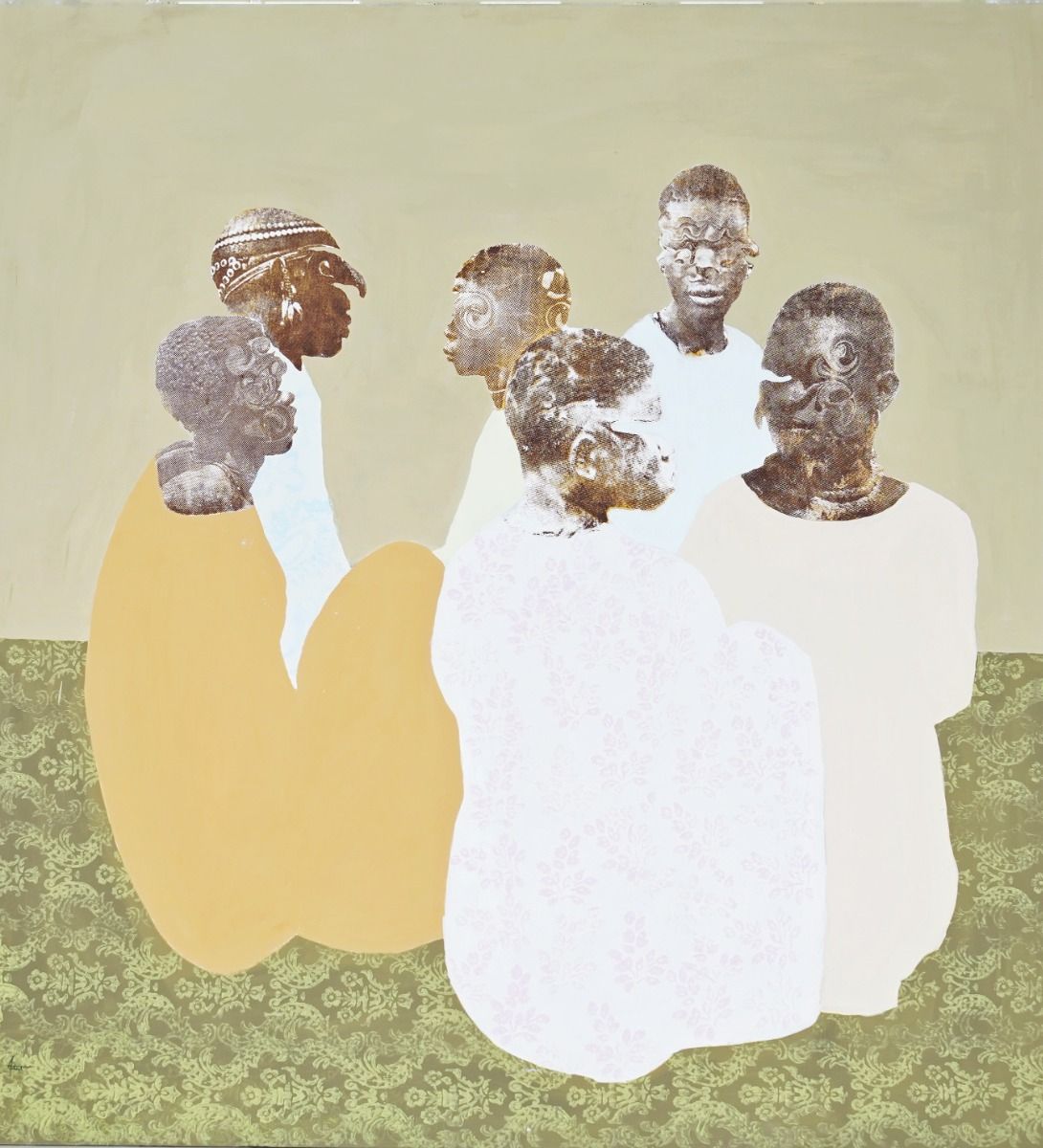
Aksah Seyoum, Rites of Flesh V, 2025, R19,002.00 ex. VAT, CONTACT TO BUY
----------
One day, it might be studied by evolutionary biologists or neurologists how the art world, over time, rendered the fusiform gyrus partially obsolete. This strangely named part of the brain is responsible for some of our higher function visual processing, including (but not limited to) the recognition of faces. In the art world, the need to be able to recognise and process a face as actually potentially belonging to some specific human being is a skill in poor demand. This phenomenon is in some ways quite unique to our subsect of visual culture. True cinephiles carry their ability to quickly recognise an actor and their broader filmography as a badge of honour. In the visual arts, the muse of an artwork might be appreciated for their beauty, but is seldom the subject of further inquiry. This of course isn’t wholly unique to the arts; in the broader scheme of our visual and media culture, and especially at the rate at which media can be (even unwillingly) consumed today, it is a necessary evil to abandon any desire to fully place every stranger’s face we see on a billboard or a viral clip that is both present before us and fading into digital obscurity. We see strangers’ faces everywhere.
This thought faintly haunted me when my co-curator (Boitumelo Makousu) and I were so beautifully confronted by an assembly of our own creation as we grappled with the sheer amount of portraiture in On behalf of…. Indeed, we thought and said aloud: we have never seen quite so many faces. This was but an emergent quality of the exhibition itself, seemingly taking on a life (and many facades) of its own. With nothing but sheer respect for the amazing team of Zeitz MOCAA who brought together the landmark When We See Us exhibition, under the curatorial leadership of the late, great Koyo Kouoh, my mind wonders to what it means to have seen so many of these faces in 100 years of Black portraiture. In our exhibition making, we understand that these artists may go on to do such great things through these portraits. In the same breath, we acknowledge that their subjects will hardly come to amass a modicum of that celebrity. One might argue: why should they?
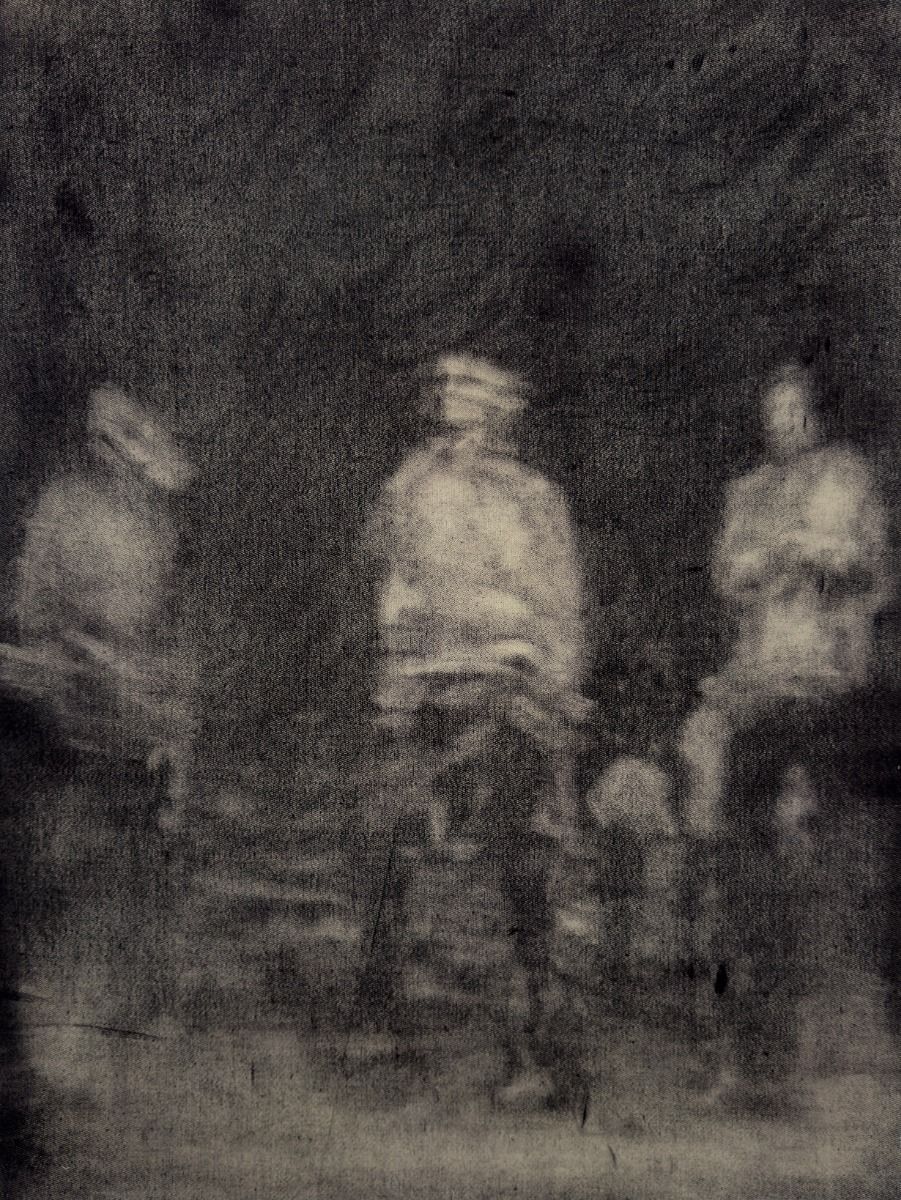
Abel Bedilu Spectator (ነፃሪ) II, 2025 R 7,967.00 ex. VAT, CONTACT TO BUY
My case is not to be the champion of the muse, ensuring that every figure painted is known as far and widely as the Mona Lisa, who might in some spaces be regarded as bigger than her renderer. Rather, my curiosity is in our relationship to representation, and what else goes unseen/unknown. A quick skim on Stuart Hall and the field of semiotics quickly helps us recognise that what we might see on gallery walls is the representation of a person, and not the person themself. It is but one beauty of art to transform a single instance into something other than its bare truth; something more exciting in its deviations from that truth.
For all of the simplicity of the previous statement, art and representation’s relationship is infinitely more tenuous and complicated than that. Historically, in the fine art space, some people and stories have long been represented in good faith to varying degrees of fidelity. So much so that the representation can safely be bastardised, playful, and maybe even absurd.
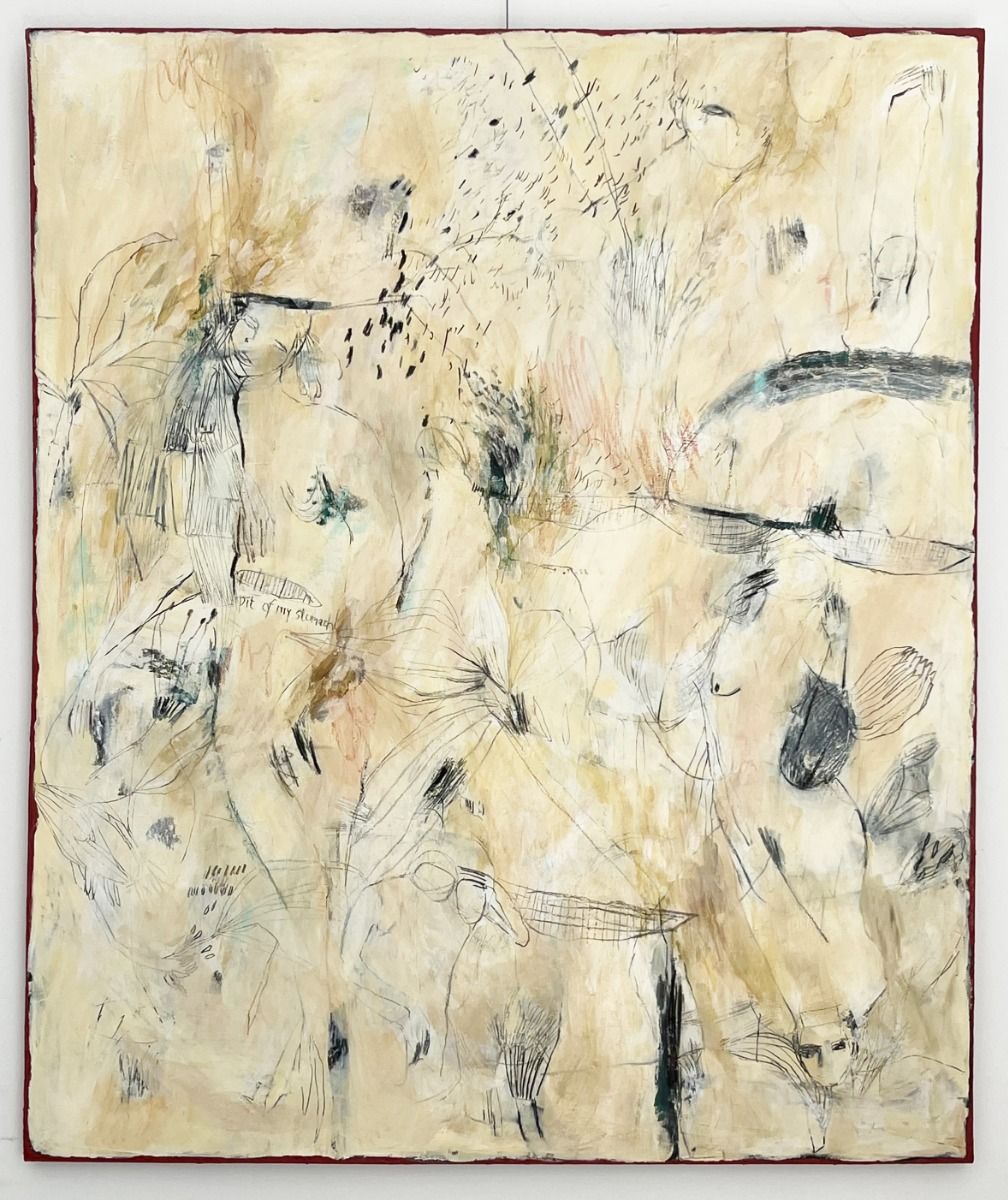
Natasha Evans, Pit Of My Stomach, R 63,000.00 ex. VAT, CONTACT TO BUY
Yet, for other groups, representation exists in such dire scarcity. As such, every single gesture need be measured. And measured again. Then once more, of course, for good measure. This was the thought process in On behalf of… as we considered an exhibition which worked as rhetoric, speaking back to the powers that be at the time of the G20 summit in Johannesburg. How does the most important international forum for the discussion of economic co-operation take place without so many African voices? So much so that South Africa belongs to one of the two G20 nation groups which are not organised around regional proximity. We’d be remiss to think of the absenteeism of African leadership as incidental; Dr Phokeng Setai warns that “History has proven to us on so many occasions that the violence enacted towards marginalised cultures is a systematic consequence of white supremacy rather than merely a symptom of intermittent shifts in global patterns” (2020: 40 - 41).
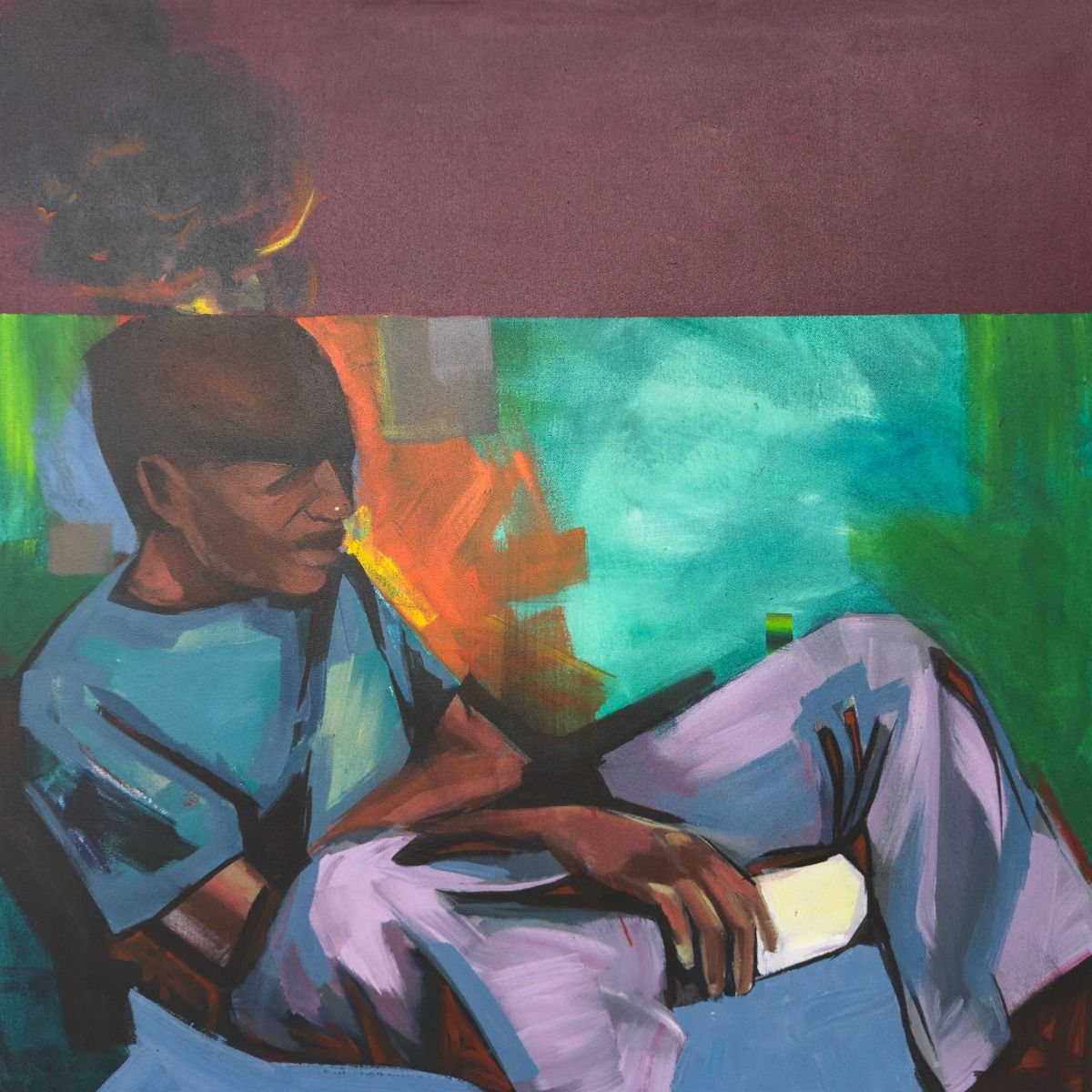 Blen Deresse, Unrest II, 2025, R8,769.00 ex. VAT, CONTACT TO BUY
Setai’s words are taken from his paper Curating in the dark, which outlines a curatorial methodology that seeks to open up the pathways in which to engage with Black artistic production beyond the art market’s expectations and desires of ‘Black art’. This method primarily engages with performative, durational work as it prioritises process over an object-centric approach. Where On behalf of… brings together works that are in stark contrast, curating in the dark’s interest in “incorporating strategies of multivocality and dialogism” (43) is key to the exhibition’s concerns. The exhibition’s first point of call was to decentre the artistic production of South African artists. This was not for any shortcoming of South Africa’s arts, but in recognising that should South Africa operate in any kind of pan-African solidarity on the G20 stage, it is placed in the impossible position of representing a very diverse people of 54 nations with their own distinct problems. In contrast, in engaging with the artistic practices of 27 artists situated across the continent, the exhibition prioritises subjectivity and, as with curating in the dark, multivocality. As a distinction, perhaps our method of curating around absence begins with asking: who is not represented?
This line of enquiry only opens the door to further scrutiny. If some of the most powerful states in the world have failed to stage a more diverse forum, and this exhibition seeks to challenge that, it might be pointed out how we were able to only bring together artists from 12 different countries. To this, I respond: yes, let us demand more. Curating around absence operates like an excavation: the further we critique and dig into the holes, the more we are able to welcome into our spheres of knowledge. The contours of this exhibition are defined not around its content, but from the negative space it moves through. These are the haunted halls between us and those African countries that were too hard to reach, inaccessible by the thousands of kilometres worth of tripwire that makes intracontinental artistic exchange a difficult, bureaucratic and extremely costly endeavour.
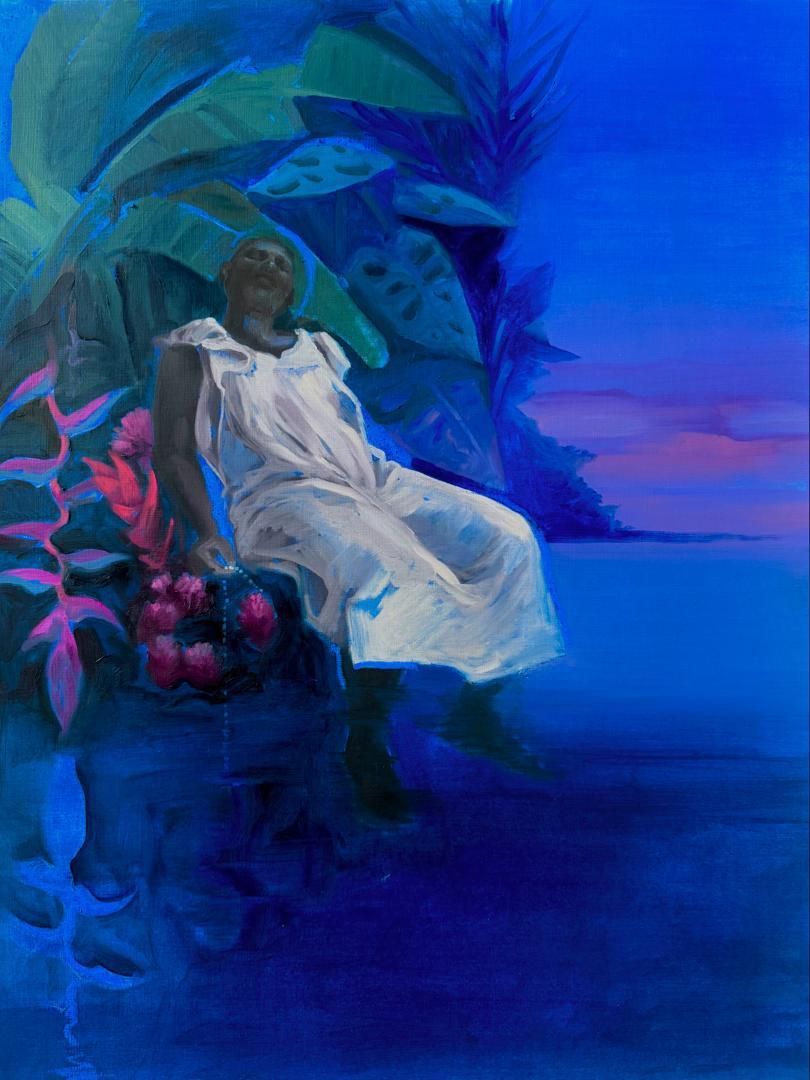
Carine Mansan, Meditation, from the series Le jardin de ma mère, 2025, R35,000.00 ex. VAT, CONTACT TO BUY
Those artists and artworks that we do manage to bring across are asked not to bring with them some objective political report of the country. The works reflect personal, intimate histories and enquiries. These works are by no means a comprehensive survey of the African political landscape (if such an easily packaged thing even were to exist). This subjectivity calls upon us to invite more voices, who might speak to more traditionally political subjects. Intentionally, we wanted to invite works which are both lively and jovial, as well as works which are jaded and are literally (as in literally literally) enwrapped in barbed wire. To reflect only the latter would be to do a disservice to the joy that comes with living in this beautiful continent, in spite of all the challenges posed.
This subjectivity digs holes in the fallacy of objectivity. Even in something as supposedly objective as the cold hard facts of economic policy, there are real people’s small and big problems tangentially related. Just as there are real people with small and big problems depicted through the many many faces in the gallery. Through this lens, and in curating around absence, we look forward to seeing more faces engaging in these discussions, and asking those most pressing questions on behalf of those unrepresented, unknown faces.
Further Reading In Articles


African Artist Directory