

Standing As An Observer Of History
presented by Reem Aljeally
Standing As An Observer Of History
______
Conflict and war shape our experiences and definitions socially, and art is no different. Most artists from conflict-affected regions find their work defined by these circumstances, whether they embrace or resist this lens. Since April 2023, many Sudanese art exhibitions have been framed politically or nostalgically, but as a curator, I ask: who is thinking of the art itself? How does the environment affect visual memory and artistic production?
Reflecting on my own work, I noticed how time, change, and exile transformed my paintings from intimate interiors to isolated figures in undefined spaces, opening new horizons of seeing. This collection explores visual transformations carrying layers of political, social, and emotional meaning. “Standing As An Observer Of History” positions the artwork and its creator as witnesses to change, not to tell or analyze history, but to observe movement and stagnation amid liminality. The selected artists investigate how temporal liminality reshapes visual and social relations, revealing resilience and quiet strength in stillness.
_______
Banner Artwork Details:
Waleed Mohammed, Untitled, 2025, Acrylic on canvas, 12 x 16 cm, CONTACT TO BUY.
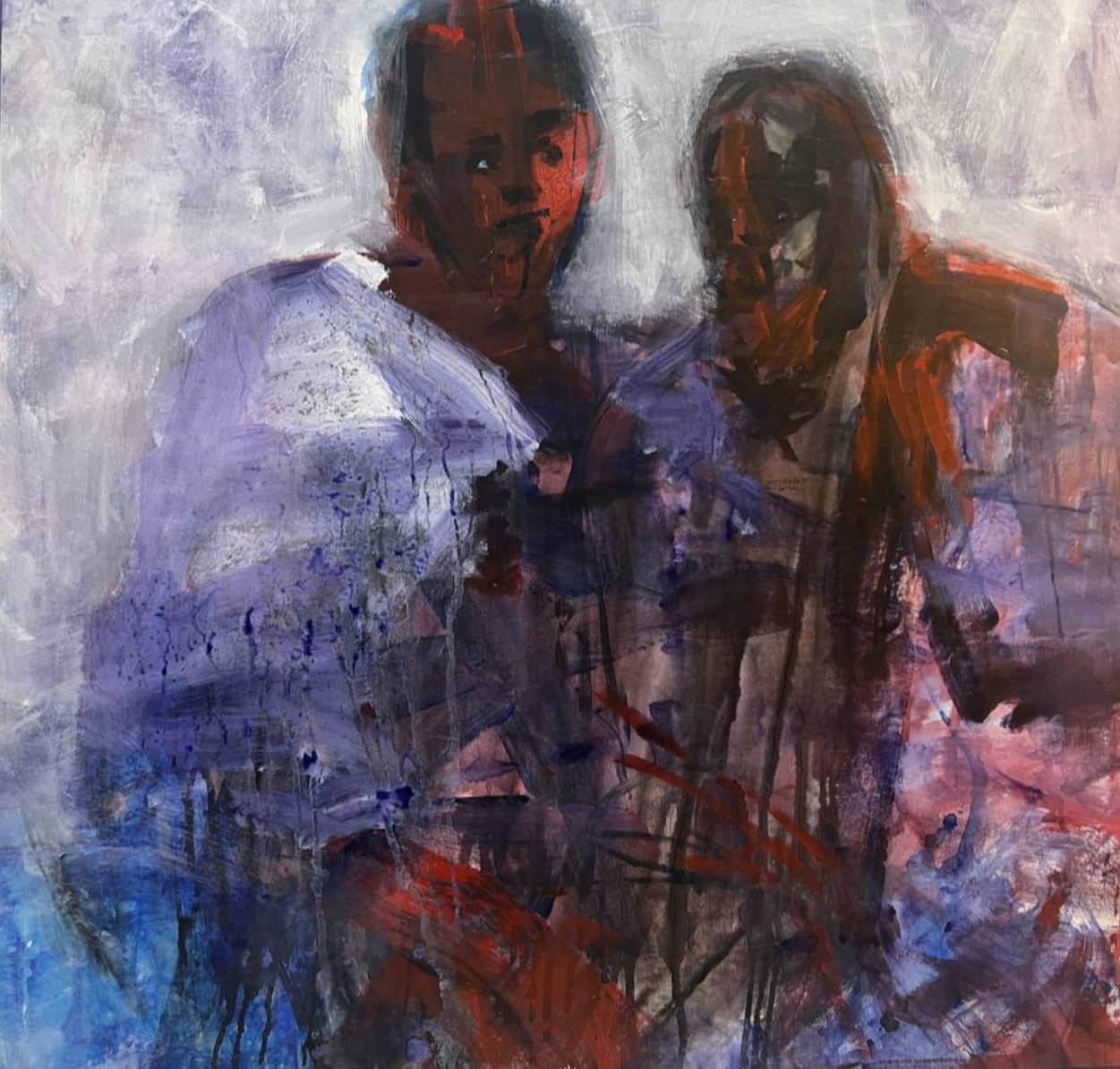
Almogera Abdelbagi, Humanities 5, Mixed media on canvas, 100 x 100 cm, 2025, R25,881.90ex. VAT, R25,881.90ex. VAT.


EXHIBITION CURATOR, REEM ALJEALLY
Reem Aljeally is a visual artist and curator with an educational background in Architecture. She is the Founder of The Muse multi studios (2019) and The Sudan Art Archive (2022), aiming to support, promote, and preserve visual arts in Sudan. Her artistic practice focuses on painting, installation, and printmaking exploring themes of space, memory, movement, and self-image. She has exhibited internationally in Germany, Spain, UK, Russia, Portugal, The United States, Uganda, Kenya, and South Africa. In 2025, Reem received the 2nd place runner up for the ANNA Award by Latitudes Online.
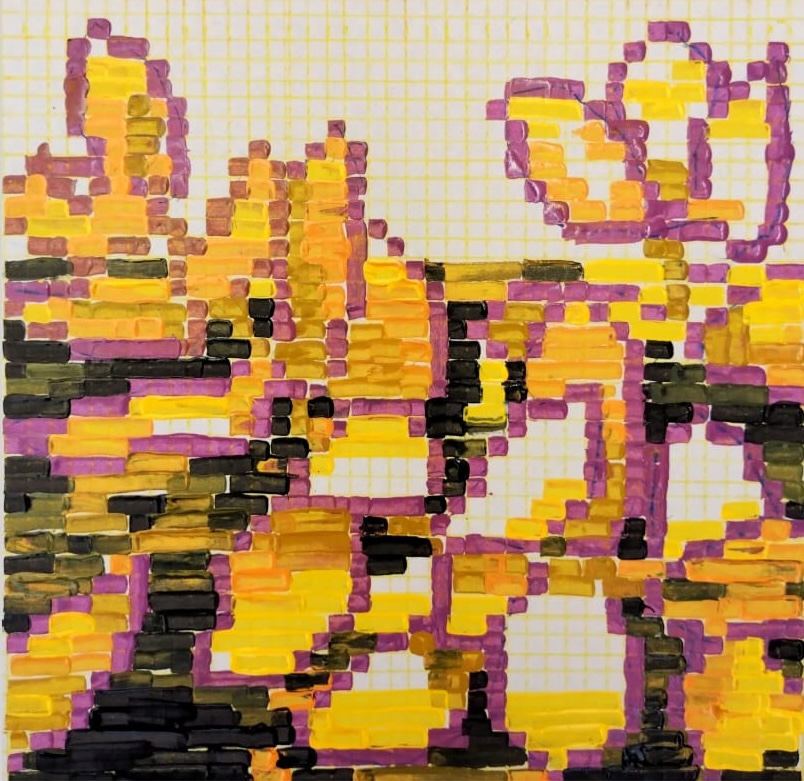
Mozafar Ramadan, Temporary 13, 2025, Printing ink on cardboard, 20 x 20 cm, R3,450.92 ex. VAT.
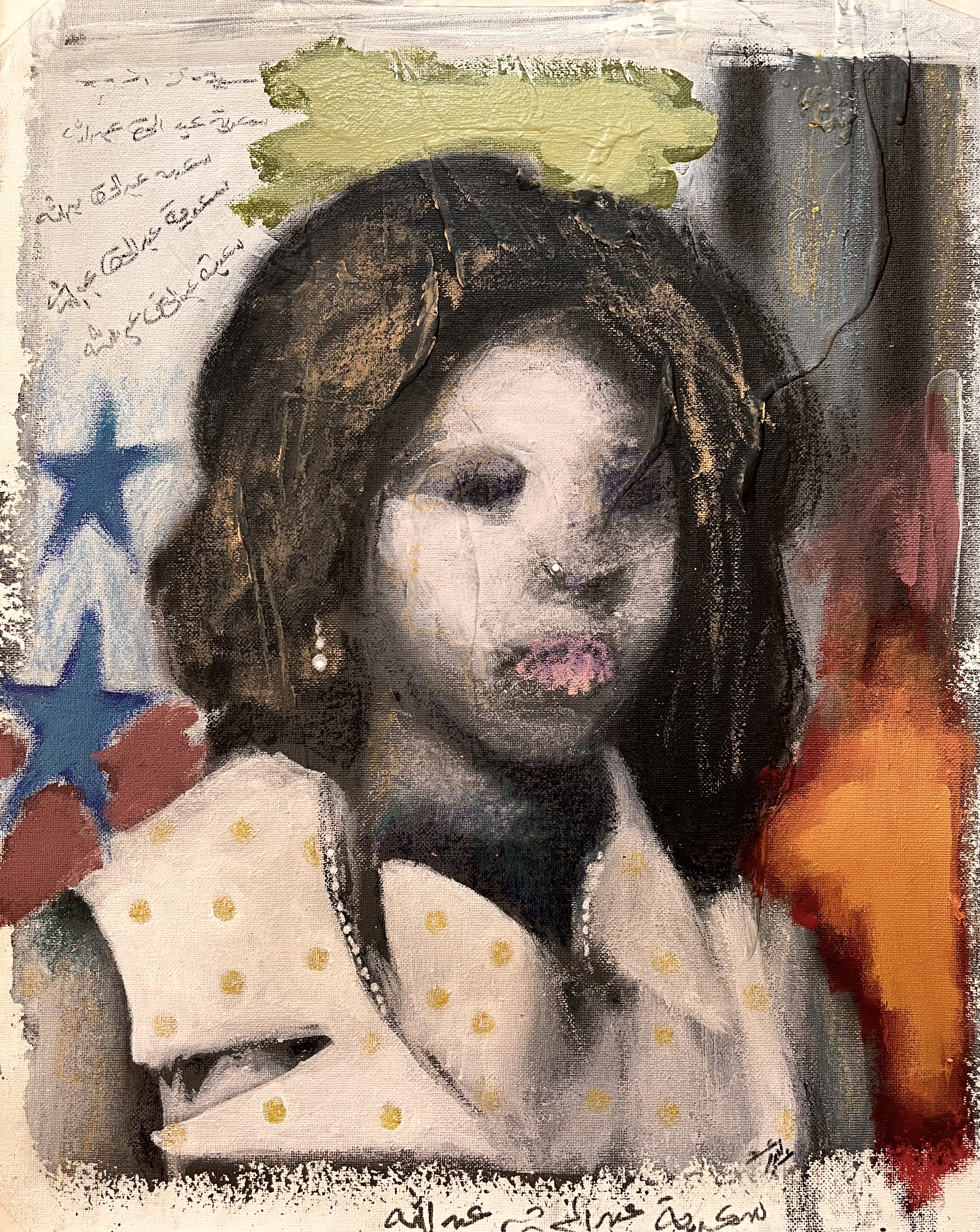
Waleed Mohammed, Saadiya Abdalhaq Abdallah, 2025, Acrylic and wax crayons on canvas, 35x40 cm
While the relationship between the artist, the artwork, and the surrounding environment is not new, this collection seeks to reexamine it through the lens of visual transformation - abrupt or gradual - carrying political, social, economic, and emotional layers. Standing As An Observer Of History positions the artwork, and by extension the artist, as a witness to change, not to narrate or analyze, but to quietly observe the tension between movement and stillness in estranged environments. Though this stance may seem detached, it is a deliberate act of endurance: a refusal to reduce lived realities into singular narratives. The selected works by Almogera Abdelbagi, Mozafar Ramadan, Waleed Mohammed, Amani Azhari, and Reem Aljeally interrogate how temporal liminality reshapes visual perception, behavior, and spatial relations.


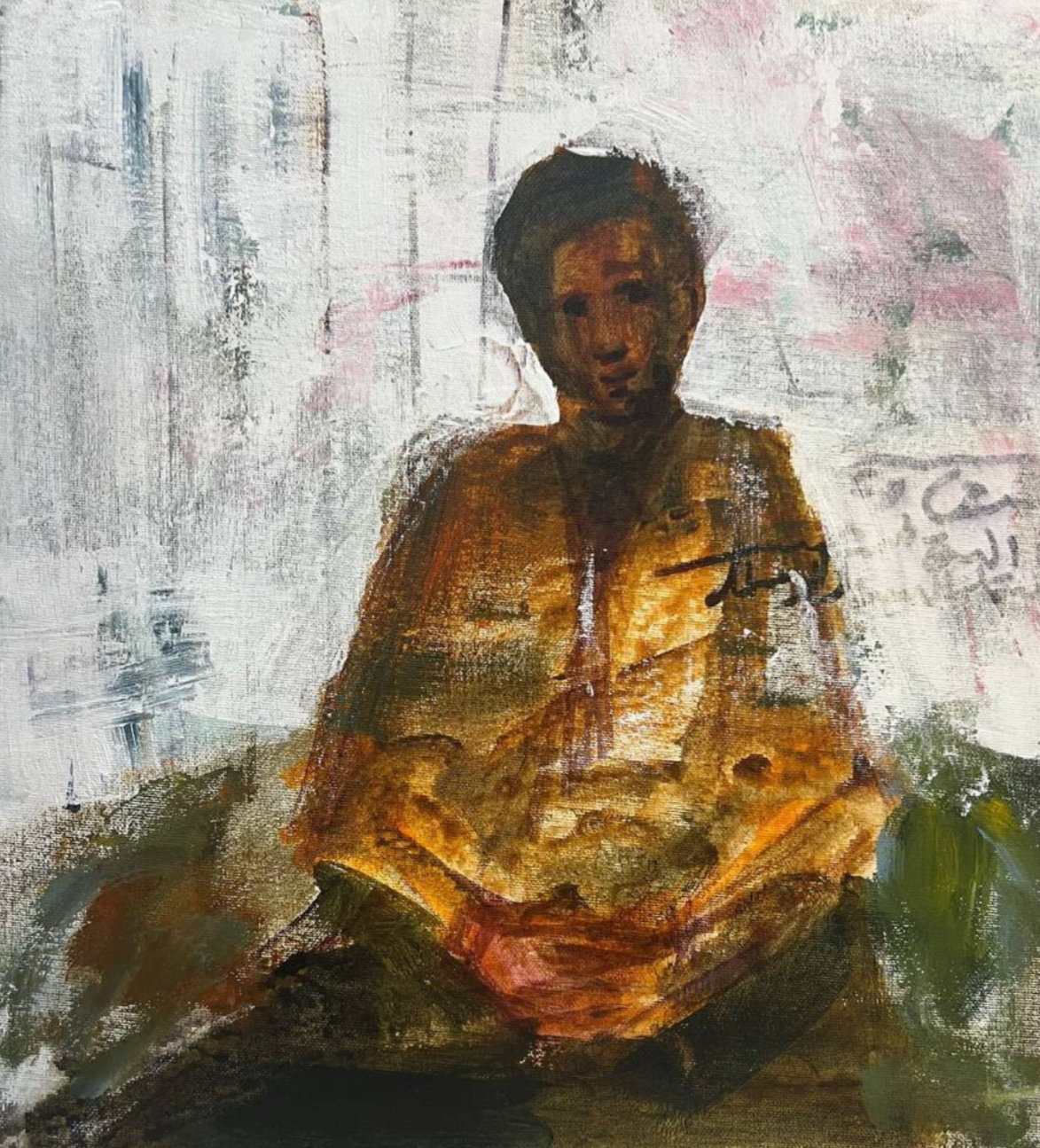
Almogera Abdelbagi, Humanities 4, 2025, Mixed media on canvas board, 40 x 40 cm
In Humanities, Almogera Abdelbagi - known for his vibrant palettes - subdues both background and figure, muting color into smudges of darkness that mirror the spiritual erosion caused by waiting. His obscured compositions visualize instability and reveal how upheaval transforms the artist’s internal landscape. Amani Azhari extends this inquiry through paintings of vividly dressed women performing ritualized gestures. Her figures inhabit thresholds - neither advancing nor retreating - yet their repetition asserts agency within constraint, grounding female solidarity in intimate spaces.
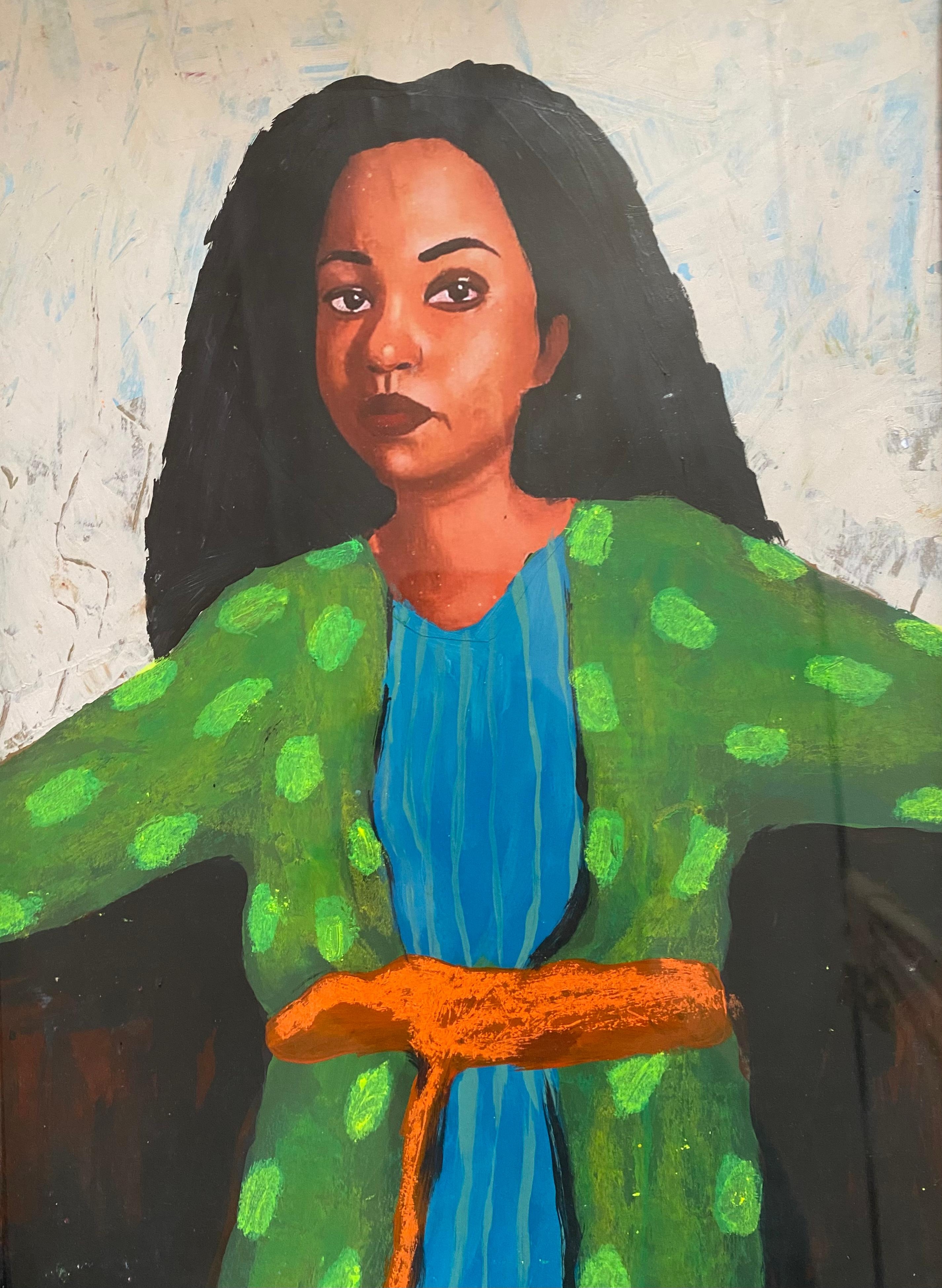
Amani Azhari, Cinnamon colored girls 3, 2025, Acrylic, oil pastel, collage on paper, 30 × 40 cm, R6,901.85 ex. VAT


Waleed Mohammed’s practice moves from archival recreation to reimagination. Working between Nairobi and Kampala, he explores histories of displacement and fractured memory, tracing how archival images connect across distances and time. In contrast, Mozafar Ramadan turns toward land and ecology as witnesses of transformation. His recent collection Temporary layers recycled materials and repetition, centered on the Al-Aushar plant (Calotropis Procera), resilient in harsh Sudanese landscapes. Mimicking its adaptability, Ramadan parallels his navigation of new geographies, where memory decays into abstraction. His work rejects catastrophic temporality, proposing alternative rhythms that resist collapse.
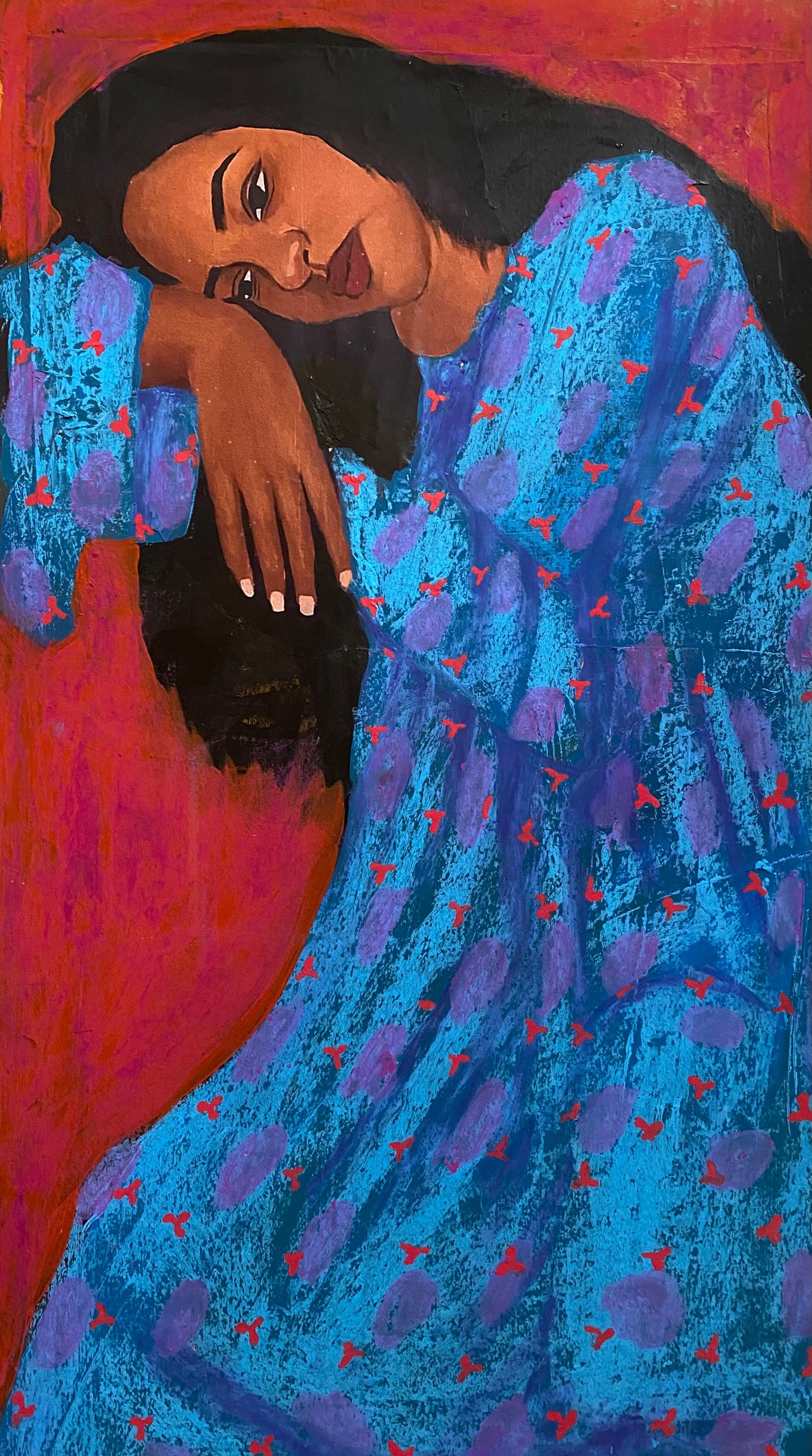
Amani Azhari, Cinnamon Colored Girls 1, Acrylic, oil pastel, 2025, collage on paper, 30 × 55 cm, R8,627.31ex. VAT
This collection reframes these artists’ realities through the lens of temporality, revealing how their work captures suspended existence, where resilience emerges in liminality, and the ephemeral becomes a site of reimagined futures. While the artworks in their visual output strip away context, their realities and circumstances of creation ask how identity persists when external markers dissolve. Through their nuanced portrayals of waiting, solitude, and endurance, the artists reveal how moments of stillness are charged with quiet strength, transforming passivity into profound acts of survival and hope in times of uncertainty.
To enquire about any of the artworks in this exhibition
Latitudes CuratorLab is proudly presented by Rand Merchant Bank.

In partnership with Art School Africa.

Further Reading In Articles


African Artist Directory