
On behalf of… Journals:
held / in transit / between borders
- by Georgia Kruger,
Latitudes' Operations & Project Manager
------------
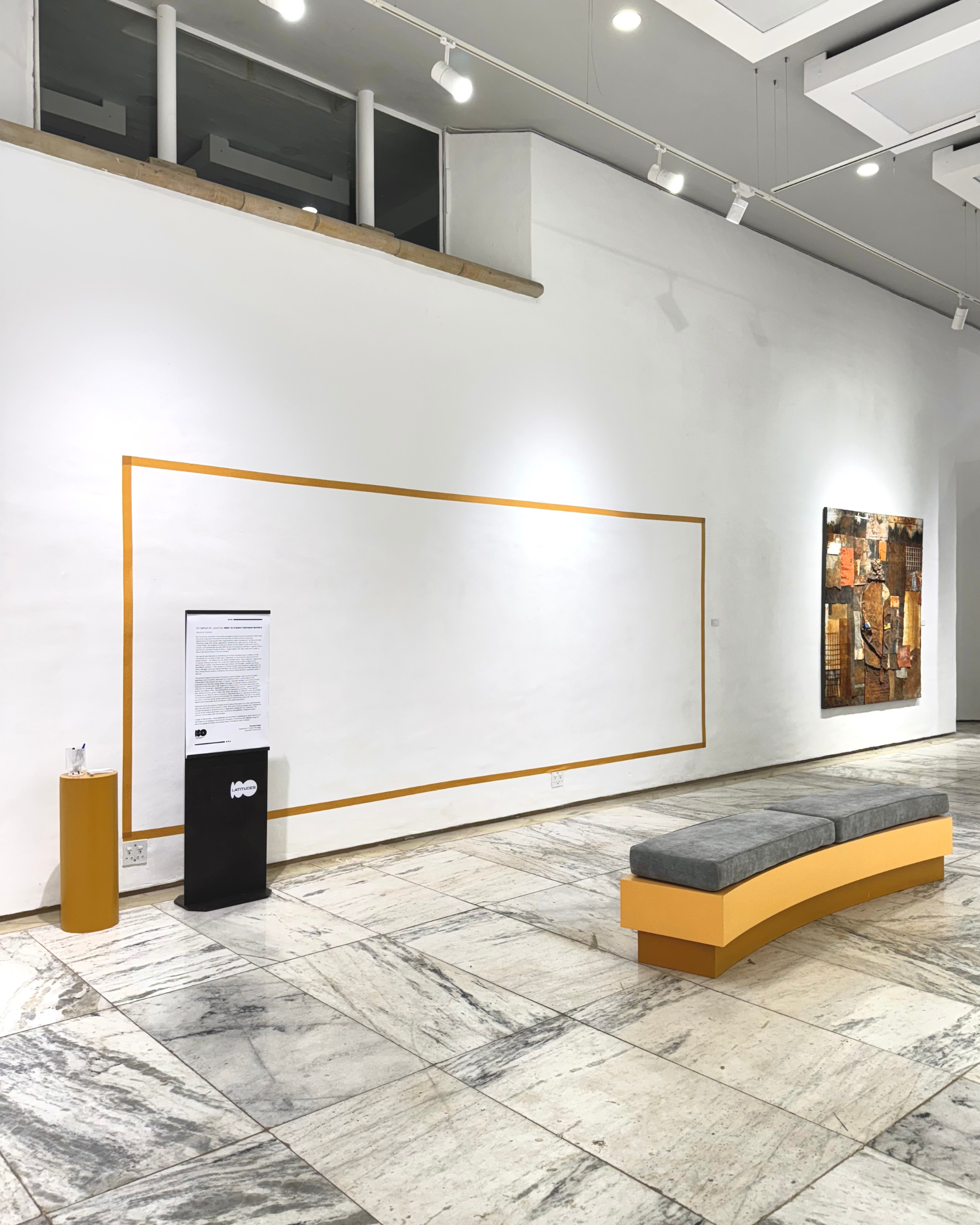
By nature, the movement of artworks between borders is one of uncertainty within rigid structure. Shipping of artworks internationally involves months of planning, applications through government organisations, piles of paperwork, double and triple checking codes and values, negotiation, bureaucracy, high costs for transit and customs fees, and dozens of hands and minds.
Take a moment to read “held / in transit / between borders” below, as part of our On Behalf Of… journal series, written by Latitudes’ Georgia Kruger.
It is the hidden hurdle within the art industry and sometimes the most difficult part of bringing an exhibition together. Within the African continent the bar of entry is raised higher, with high costs and access to resources being limited, if not non-existent.
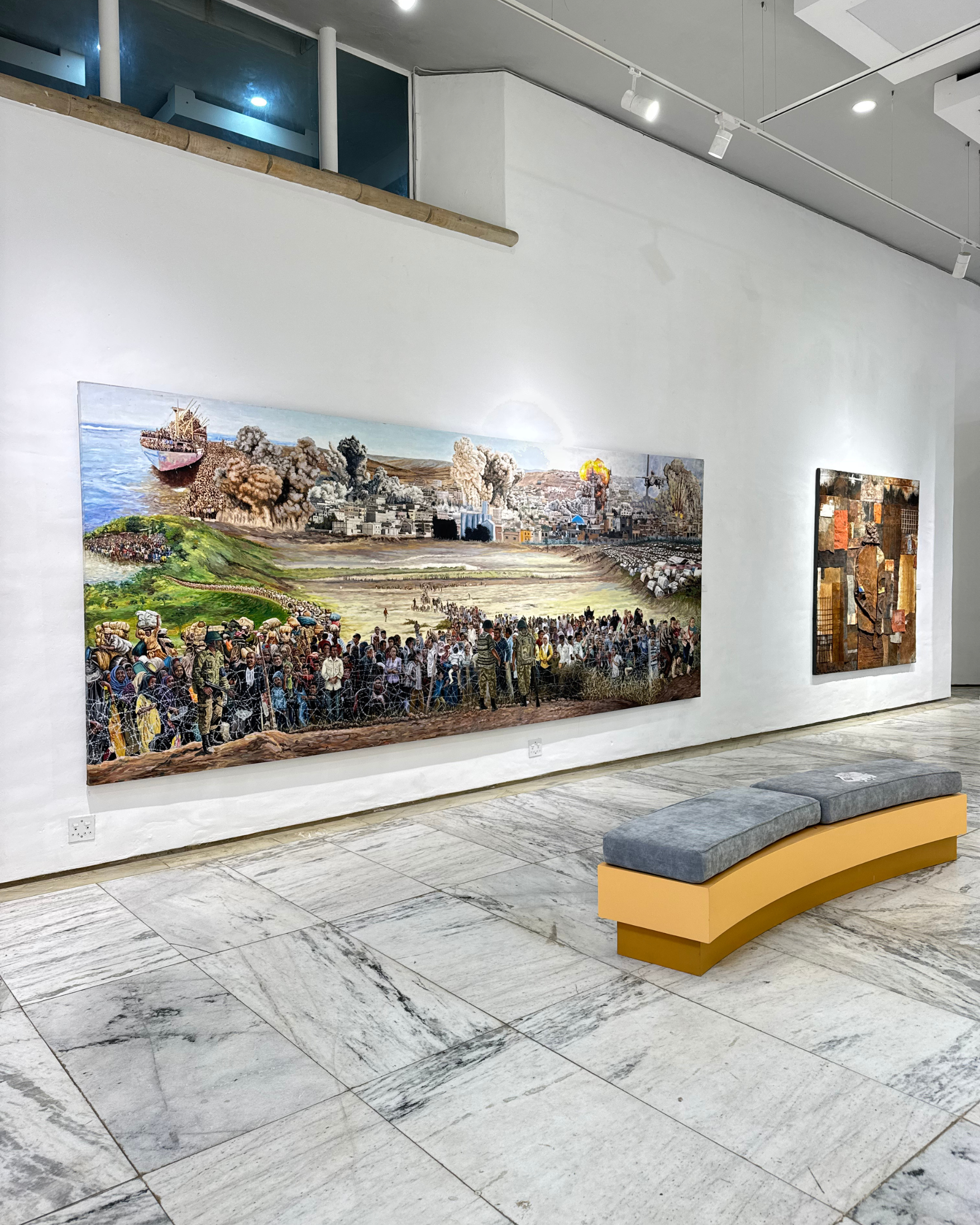
This space was intended to be filled by an artwork representing a hundred or more individuals on a journey of their own, a testament to the enduring nature of human determination — an artwork by Vita Malulu entitled Peace. Peace depicts a large group of people making a journey from a war torn area through a plain of destruction, searching for safety. The people depicted come to an impasse: a barbed wire fence guarded by soldiers. In the background fighter planes drop bombs on a destroyed city, and a refugee camp sits nestled between the conflict. Perhaps as further testament to the uniting African quality of tenacity, the titling of Peace stands in contrast to what it depicts.
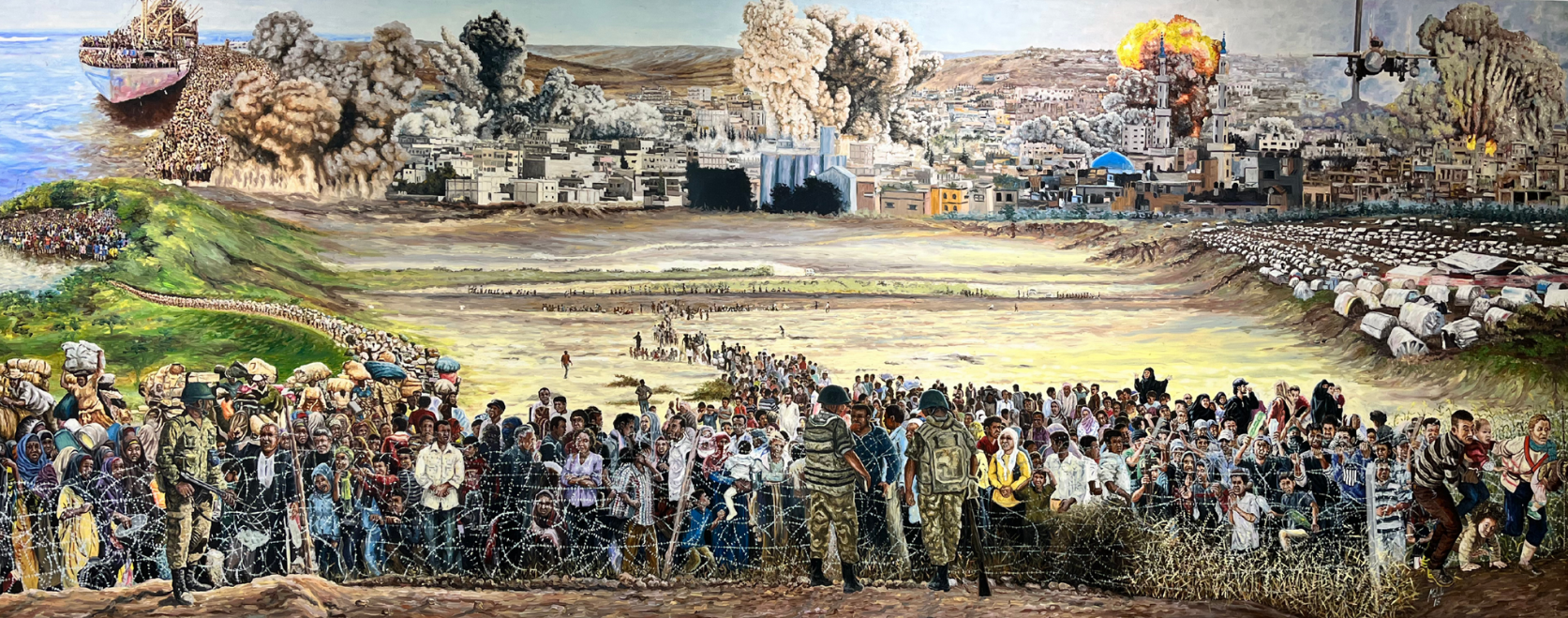
This artwork began its journey in Tanzania in early October, after months of careful planning, and was detained at a customs facility in Johannesburg. The individuals in the artwork were held / in transit / between borders, much as the artwork physically was at this time. For Rangi Gallery founder Lorna Mashiba Albou, the decision to exhibit Peace carried particular weight. Transporting artworks is challenging in itself, but the scale and subject of Malulu’s piece required careful consideration of the story being moved across borders. Painted in 2015 during a residency in Gothenburg, Peace evolved from an initial focus on conservation to a reflection on conflict after Malulu’s conversations with fellow artists from Syria and Congo. Rendered in his signature, densely populated style, the work speaks to the shared human experience of being caught in circumstances beyond one’s control.
An unexpected irony emerged during preparations for its exhibition: Peace, an artwork depicting people held in uncertainty “between borders,” became delayed in its own transit. Its detention echoed the very themes Malulu addresses — movement, obstruction, and the systems that shape who or what is allowed to pass.
The truth is that the systems infrastructure in place that allow us to ship internationally were not built with artwork transit in mind, and many of the processes and timelines are outside the sender or receiver’s control. Regulatory bodies do not understand the nature of the artwork shipments, and continue to fail galleries, museums, artists, curators, art handlers and arts workers.
Further Reading In Articles


African Artist Directory