

embo: where we once knew
presented by Onke Ngcuka
embo: where we once knew, 2025
______
‘embo: where we once knew‘ is a pathway to ancestral memory: isikhumbuzo sethu sothando (somhlaba). This exhibition is a love letter to the land; it is the cry and the consolation; it is a reminder that this land continues to birth us.
Xa singena enkundleni yolwazi lomhlaba, we recall that isiXhosa cosmology also remembers abantu as extensions of the land. A land that remembers us - according to ancestral memory - as a culmination of culture, tradition and knowledge attuned to the rhythms of nature.
We dance, to melodies of the water and cow hides. Perhaps this is why when we discuss our conception kuthwe siphum’emlanjeni nenkomo.
Unobangela bobukho bethu is through the generosity of the natural world’s extension and sacrifice of itself for us, kuba umntu ngumntu ngendalo. isiXhosa has long acknowledged this symbiotic relationship between planetary systems and its people: the origins of clan names named after flora and fauna centre this truth lovingly, begrudgingly. We are forever etched into this earth. It remembers us vividly.
Xhosa cosmology cites UHlanga as the Holy Ancestral Place theorised to exist at the intersection of the sea and horizon. Watching ukwehla kwelanga along the coastlines of eKapa, it is near impossible to imagine a Holier place. But the multigenerational collective of Hamburg, eMpumaKoloni have brazenly and beautifully begun to reinsert us into the Holy Narrative - weaving our worlds into “Our Sacred Ocean: Ulwandle Lwethu Olungcwele, 2021 - 2022”.
Our future is promised by our past. Our futures remain uncertain because we have forgotten our past promise to the land when we landed on its shores.
A starting point to answering this question is offered in Abongile Sidzumo’s, “Yakhal’inkomo”, which continues Ngozi’s caressing sonic, Serote’s powerful prose and Mam’Khumalo’s lustrous melody of the same name, cry, longing, mourning.
Sidzumo’s craft here, gently shapes the luscious crevices of imihlaba nentaba zakwaXhosa that remind me of the Amathole Mountains that cradle amaMpandla, oTshayingwe, oMbona, in my ancestral home eXesi. Sidzumo’s offering reminds us to mourn the forgotten promises to the land, and its bygone biodiversity. Here, we grieve what once was before we build anew.
Yonela Makoba cradles the land (and us) as we mourn our once celebrated love for it. ‘Thula Thula ( Hush Hush), 2021’ is a lullaby to the Amathole mountains; iintaba zemazi which lay the ground of the fertile land that birthed Hintsa, Biko neKumkanikazi Sandile - iintaba ezisathulisa amathambo abo nangomso. Our futures are buried here. Our past must be reintroduced.
Cheriese Dilrajh’s “What the Seas Brought, 2024” is a beautiful marrying of culture and the sea; a beautiful tapestry of the intricate connections between people and planet. This piece drives this exhibition home. Dilrajh’s ode to lost ancestral connection to land as a result of displacement, violence, disruption, is perfectly placed to leave us with the question of, ‘now that we remember, where do we go from here?’.
This tapestry weaves - a layer at a time - the ponderances of creating new meaning from unknown histories that continue to shape ubuntu bethu. We must converse, especially so during the time of deadly climate devastation - née, nature’s retaliation to our exploitation of it - that disrupts culture, livelihoods and forces migration. We remember those who live(d) along floodlines and have now lost bloodlines.
‘embo: where we once knew’ is a reminder that we are here but briefly (gorgeously), that we must move like the dawn of evening light; softly, delicately, knowing we are rapidly departing and only the land will truly remember us:
Us, the sweet hushed kiss
of a gentle breeze upon ulusu
Thina, abazalwe ziintaba
zemfazwe
that hold an arresting,
devastating beauty
Thina, bantwana bemifula
‘nto zoHlanga
abancanyeswi lilanga,
E xa lisijongile lithi,
“Kwakuhle ukuzibona uphila phakathi kolusu lomnye!”
Sicelela thina, sicelela umhlaba in remembering Ms Simphiwe Dana’s Mayine (2010) as she melodies,
“MAYINE!
Galelela ntsikelelo
Oh! Yan’inkululelo”
Sithi Masibuyeleni Embo! All imagining is welcome. Makube Chosi, kubeHele kulomhlaba.
______
Banner Artwork Details:
Image credit: Onke Ngcuka


Image Credit: Apayin Odame-Takyi
EXHIBITION CURATOR, ONKE NGCUKA
Ozalwe kweyoMsintsi, a year into liberation; when the violence was silenced and the dream of a nation was burning the chests of her birthers.
Onke gently carries the manifestation of this era; a time of bloom, the golden era of hope, when victory was ripe in the air.
Ngcuka’s work centres inkululeko through the lens of uthando lomhlaba: love, as understood through Xhosa indigenous wisdom. Her work is an endless open love letter to the land and its people.
The creative director works in the film and art sectors, recently having produced a short film on climate and spirituality using intsomi storytelling form.
Their current art exhibition ‘embo where we once knew’, currently with Latitudes Online, is an extension of her exploration of nature-native relations.
Ngcuka believes umntu ngumntu ngendalo. She knows that the remembering of this symbiotic love and relation is a means yokuzilanda, yokuzithanda.
Xa yena ezilanda, the artist gives gratitudes to the landscapes of eKhayelitsha, eXesi, eMakhanda naseRhawutini, ngokumakha. eKapa, her birthplace and parental home, always holding the centre. OTshayingwe, AmaMpandla, oMbona, cradling her through.
She honed her craft at the University of the Witwatersrand (Wits), Johannesburg, while studying towards an undergraduate degree in Political Science, International Relations and Psychology. She further went on to study towards an honours degree in Journalism and Media Studies at the edgy institution.
Her five/year stint in journalism saw her scribing at leading organisations such as Reuters (news and TV), Daily Maverick’s environmental unit Our Burning Planet and Investigative centre AmaBhungane. Here, she nurtured nature's narratives and shunned lacklustre leaders - locally and internationally, from Soweto to Scotland.
Onke believes love is the only way, that the love of the land will lead us through.
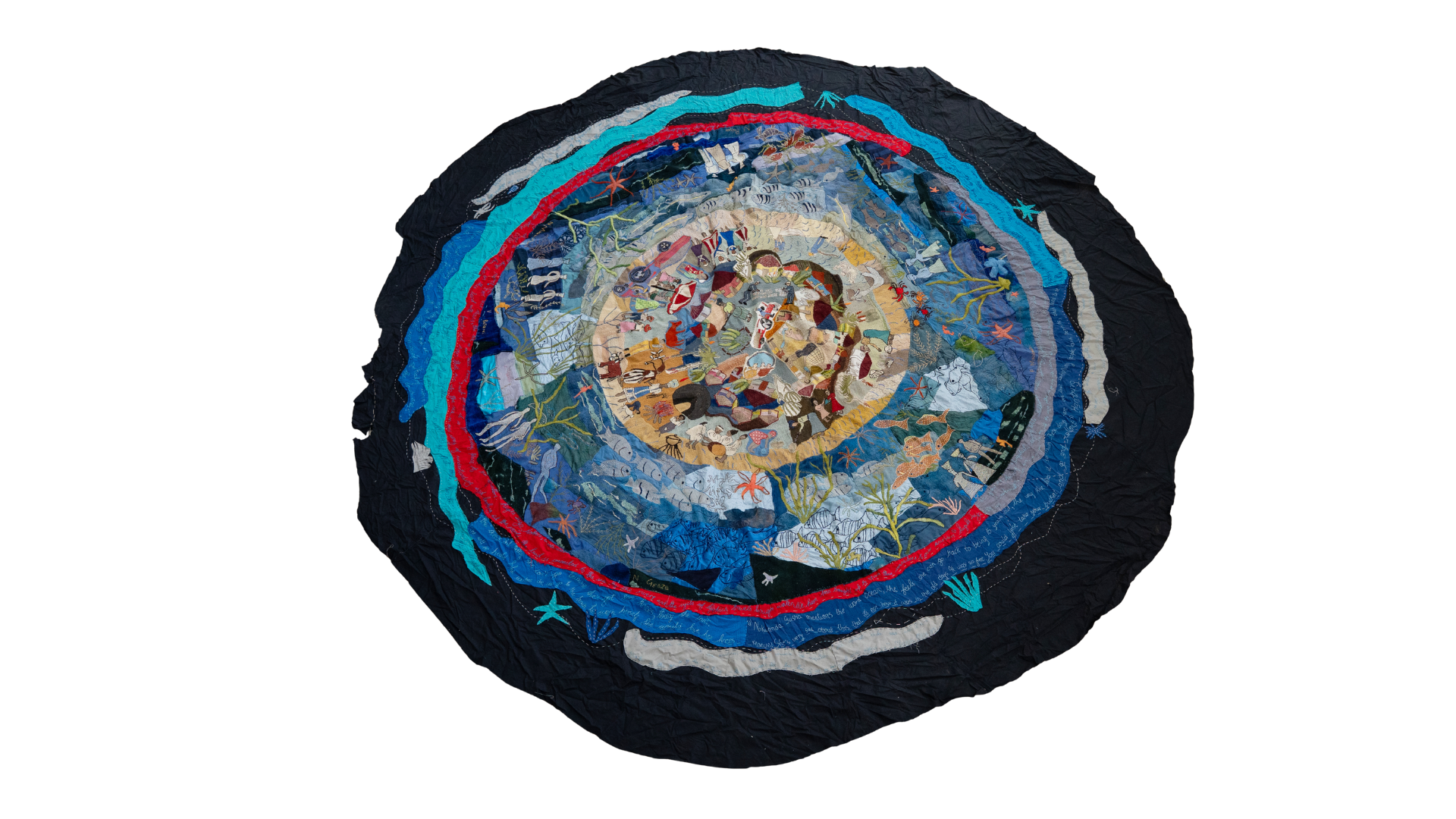
Keiskamma Art Project, "Our Sacred Ocean: Ulwandle Lwethu Olungcwele", 2021 - 2022, Mixed media (incl. embroidery, felt, beadwork, appliquéd materials, shells and sea plastic, metal, repurposed materials), 3,8 m x 3,8 m/, R455, 000.00 ex. VAT.


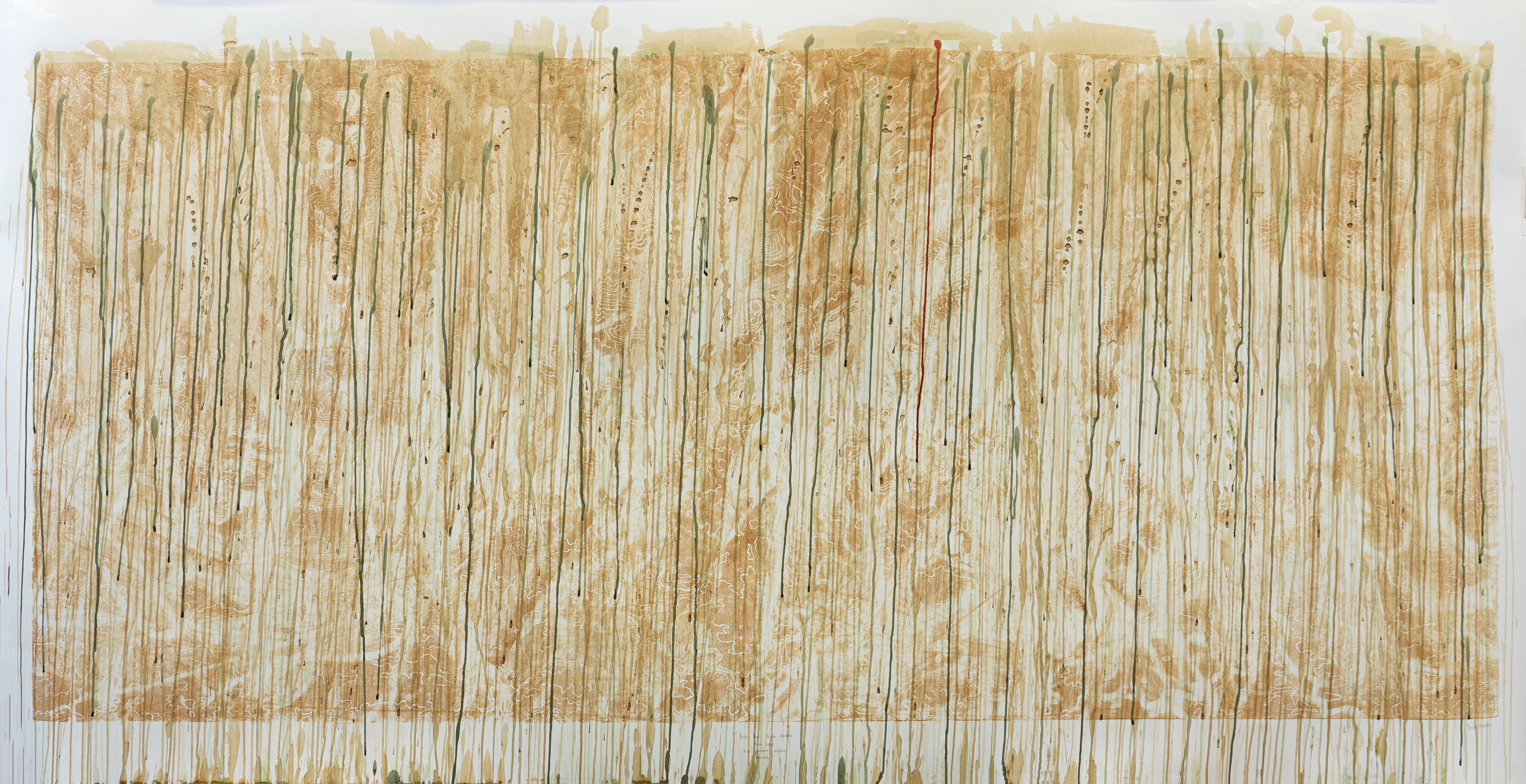
Yonela Makoba, Thula Thula (Hush Hush), 2021, Monotype with watercolor on Fabriano Artistico, 118.5 x 234.5 cm, R52, 950 ex. VAT.
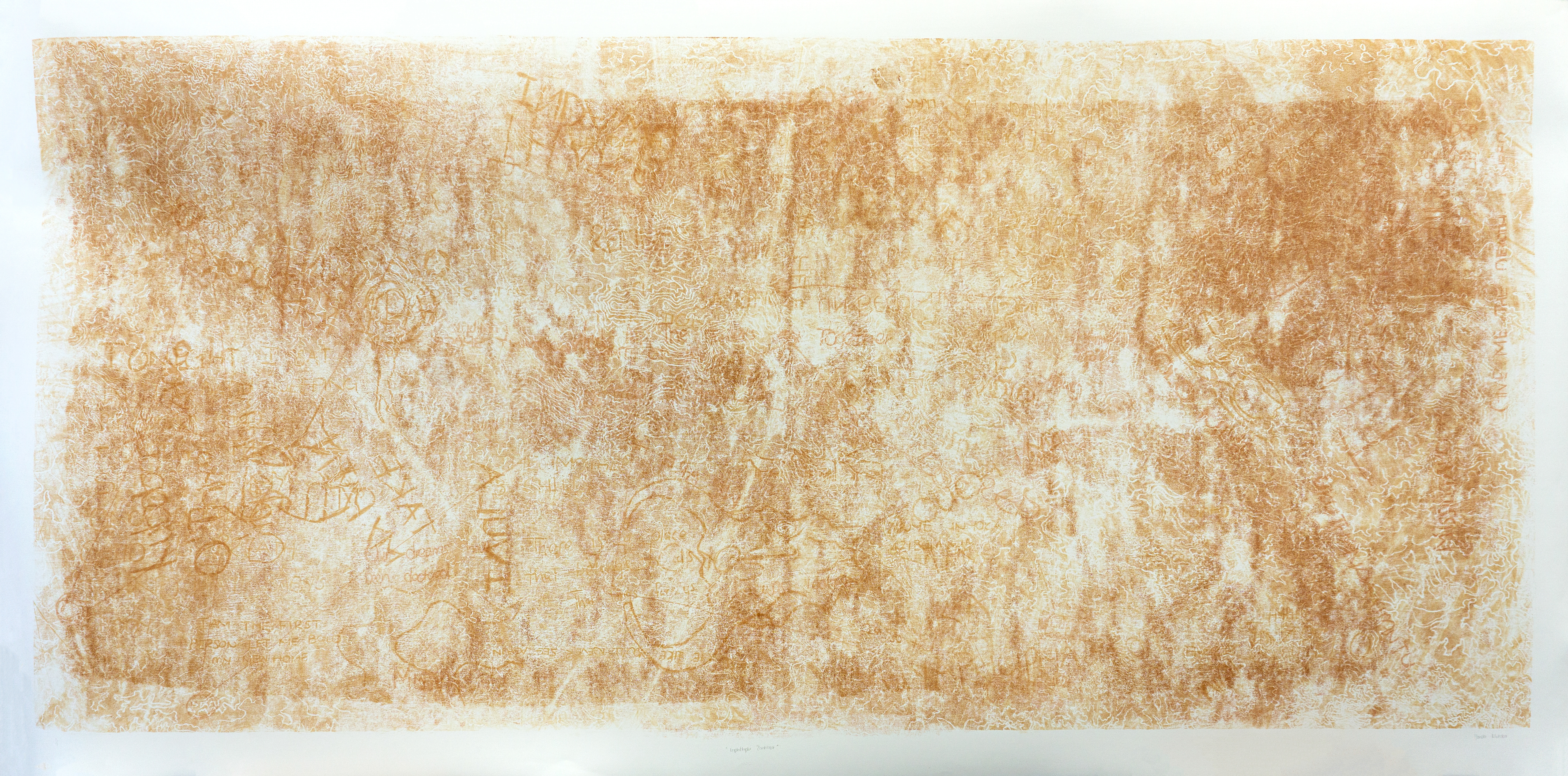
Yonela Makoba, Iziphithiphithi zomhlaba (entropy in the land), 2021, Trace Monotype with Frottage on Fabriano Artistico, 113.5 x 234.5 cm, R52,950.00 ex. VAT.


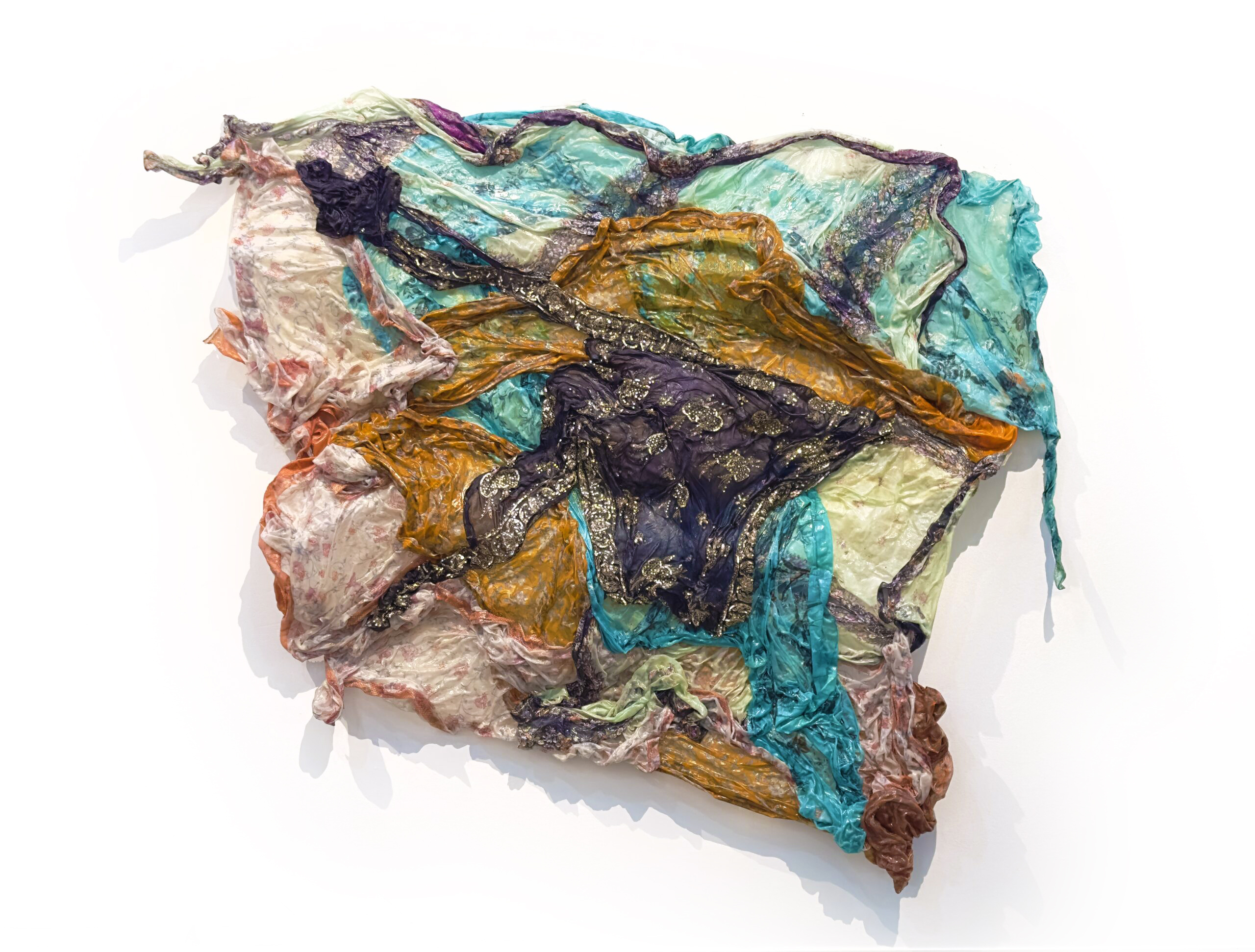
Cheriese Dilrajh, "What the Seas Brought", 2024, Sari, Resin, 204 × 192 cm, R80 000 ex. VAT.
To enquire about any of the artworks in this exhibition
Latitudes CuratorLab is proudly presented by Rand Merchant Bank.

In partnership with Art School Africa.

Further Reading In Articles


African Artist Directory