

Next-Gen Collectors: Separating Myth from Market Reality
- By Mary Corrigall
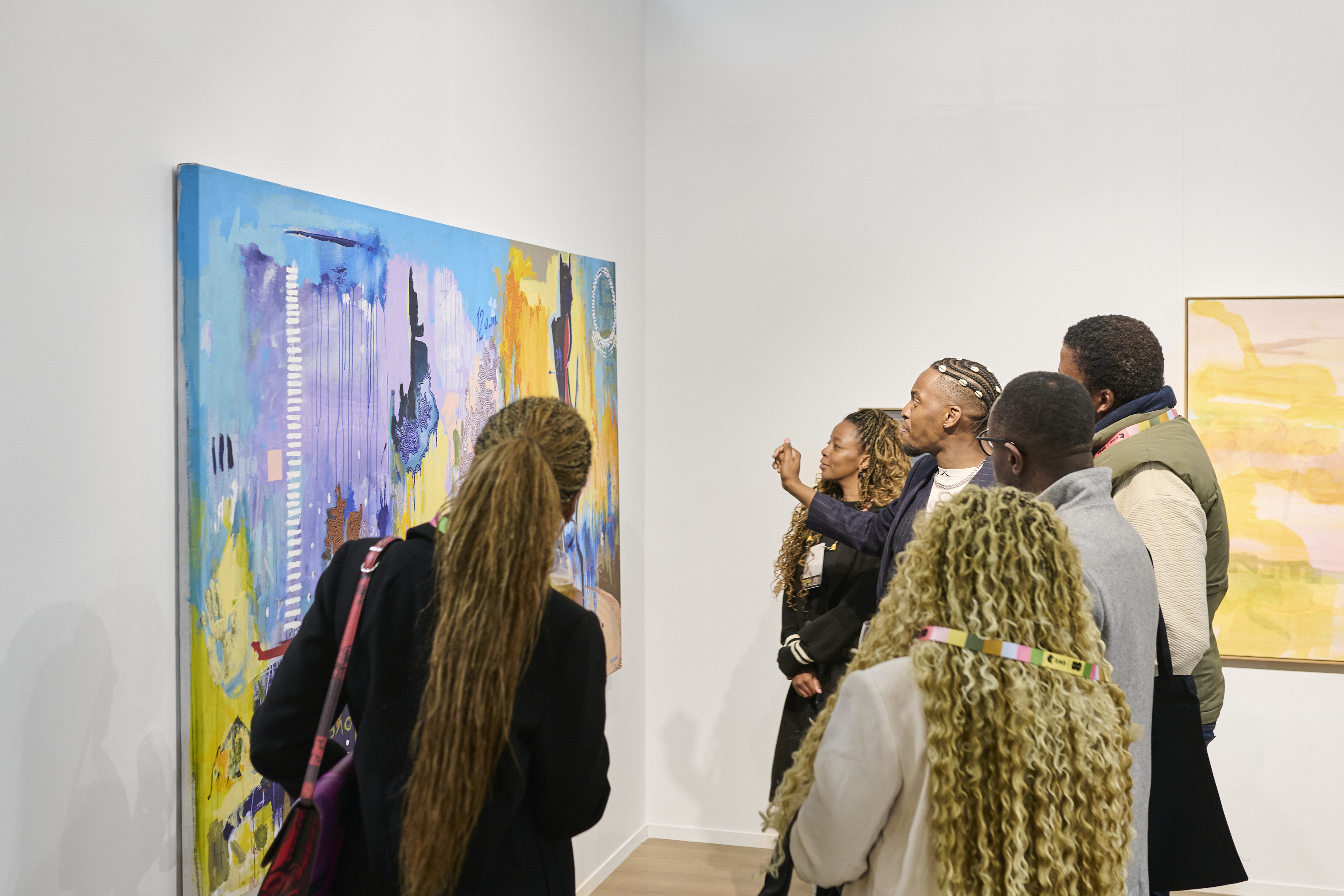 RMB Latitudes Art Fair 2025, photo by Anthea Pokroy
--------------
Millennial and Gen Z art collectors are the most discussed group. This is for several reasons; they are the next generation of art patrons and buyers, and based on reports and studies, their taste and values appear to diverge from those of previous generations of art collectors. They are already reshaping the art market too, as a new generation of artists and art dealers has emerged on the African continent to cater to them. Yet, their impact on the art market remains uncertain, with speculation overtaking facts. Reports on this segment of collectors has focused on information and data relating to habits and spending in Western art centres and doesn't necessarily reflect the realities on the African continent or the South African art market, where art collecting is also a relatively new pursuit. What global trends hold water in our neck of the art woods?
The richest source of information on Millennial and Gen Z collectors is undoubtedly the UBS Art Basel Survey of Collecting, which is released towards the end of the year and, as the title suggests, presents the findings of a survey of collectors from around the world. Most of the insights in this publication give a generational breakdown. Strikingly, the 2024 report findings dispel some of the myths around the younger generations of collectors.
Digital nomads crave traditional art
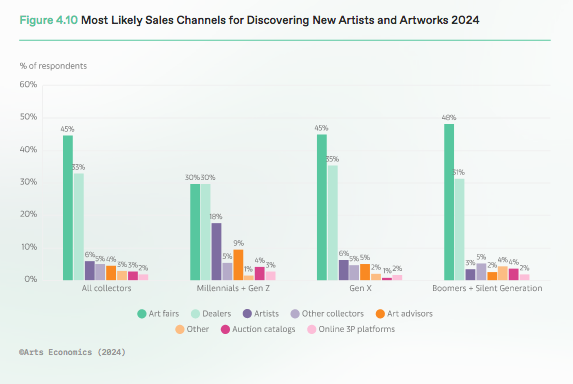
As the first generation to have grown up with the internet as a fundamental aspect of their everyday lives, and who engage in work, shopping, and socialising online, it has been anticipated that they would show a strong inclination towards online shopping and a keen interest in collecting digital art. However, as with the high majority of collectors (68%) it appears that buying art from dealers is the most "low-stress environment in which to buy art."
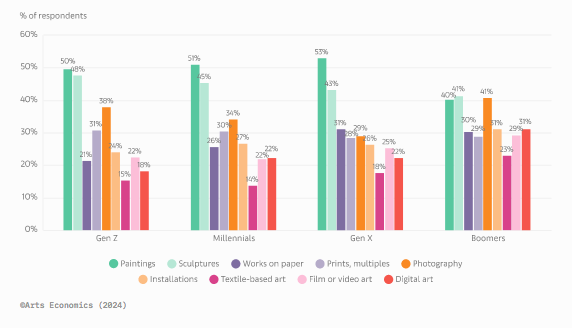
It was also surprising to learn that Gen Z (and Gen X) respondents in this survey had a preference for more traditional art mediums, owning the highest share of paintings (28%). Nevertheless, the report established that "Photography was another key medium of interest, being the third most popular choice for both younger Gen Z and millennial respondents."
In contrast to this insight, the Artnet Intelligence Report titled "The Year Ahead 2025" reveals that Millennial and Gen Z collectors are interested in non-traditional auction items such as sneakers, comic books, and Hermès bags.
Auctions prove a magnet
Where these two reports do align is on the fact that these younger generations are particularly interested in buying at auctions. In the Artnet Intelligence report, it was stated that Millennials and Gen Zers accounted for a quarter to a third of bidders and buyers at the two major auction houses in 2024, more than doubling their share in five years.
The UBS Collectors Survey 2024 concurred with this outlook, finding that Gen Z respondents showed a higher-than-average share (23%) of interest in buying at auction, "suggesting this could be an important entry point to buying."
This trend has also been observed in the South African auction scene, according to Bina Strauss, director at Strauss & Co, the dominant art auction house in this country. They have noticed a generational shift in their clientele.
"Between 2022 and 2024, Gen Z buying activity doubled, and Millennial buying increased by 65%, highlighting growing engagement from younger collectors," says Genovese.
"These buyers are not only attending our events but are also actively acquiring and consigning works, showing confidence and commitment to participating in the art market," she added.
 UBS Art Basel Collectors Survey 2024
Art Fairs cultivate the new collectors
Anecdotally, younger generations in South Africa are becoming the dominant audience at art fairs. Although they may not have VIP tickets for opening nights, in the days that follow at RMB Latitudes, FNB Art Joburg, or the Investec Cape Town Art Fair, they constitute a large percentage of the audience. Unlike Gen X or Boomers, for many of them, their first encounter with art has probably been at an art fair, rather than a gallery or museum setting.
In South Africa, this shift is significant as it suggests that a new generation of art collectors is being cultivated at these events. Attending these events is often seen as a way to enhance one's social status and affirm one's position in society. Members of the younger audience often dress up for the occasion and pose in front of artworks for their Instagram feeds, boosting the social capital and buzz around art .
Rise in Millennial owned art galleries
This shift in the demographics of audiences at South African art fairs has also been reflected in the increase of Millennial-owned or operated art dealers in Joburg and Cape Town such as BKhz, No End Contemporary and Origin Art in Joburg and Art Formes, Under the Aegis and Vela Projects in Cape Town. New generations of collectors tend to prefer dealers who not only showcase their contemporaries but are their peers and embrace their outlook, and values.
This new generation of art dealers has moved away from traditional approaches. They do not always follow a set exhibition program or focus on representing artists. Instead, they view their spaces as event-centred with a strong art component. In the case of Art Formes, the emphasis of the business is on a particular medium: ceramic art, though poetry readings are held there too.
In an article in The Financial Times, titled The artworld's age of empires might be over it was reported that this new generation of dealers are embracing new models. Instead of trying to build empires they are focused on building communities, forging a tight-knit core client base.
This may account for the fact that these Millennial-owned spaces in South Africa aren't always present at art fairs, though it is more likely they don't have the financial resources to participate as frequently and widely as more established businesses. Are the young people flooding art fairs in South Africa buying art?
Established dealers cater to the new collectors
More established South African dealers say they have clocked a rise in Gen Z and Millennial collectors.
"Increasingly, those kinds of generations are the ones that are purchasing the work," says Emma Van Der Merwe from Everard Read Cape Town.
She suggests that when the gallery participates in art fairs, they have this audience in mind when they select to show their peers or present artworks in a more affordable price range.
This has been echoed in the approach by other established galleries such as Stevenson and Goodman at Joburg-based art fairs, with a change in their offerings to a larger percentage of works by young emerging artists, smaller editioned or photographic works, which presumably are designed to appeal to this new collector group, which they are engaging with at these fairs.
South African dealers often remark that they are curious and ask lots of questions, even if they don't buy art.
Affordability appears to be a barrier for many Gen Z or Millennial collectors. Various types of nomadic platforms that showcase smaller works by different artists can better engage these collectors.
"I think that platforms like Art Under The Bed is a lovely platform, because it introduces a lot of artists to a lot of younger collectors, who are starting out in a space that's incredibly informal and slightly fun," says Van der Merwe.
 UBS Art Basel Collectors Survey 2024
Are their tastes different?
One of the prevailing myths surrounding Gen Z and Millennial collectors pertains to their motives and tastes when it comes to art. This notion is rooted in the observation that they are not collecting what their parents and grandparents collected, and would not want to acquire the so-called masters from previous generations. The Art Intelligence Report supports this idea with quotes from American art advisers.
In contrast, the UBS Basel Collectors Survey found that less than one-third of millennial and Gen Z respondents were selling off inherited artworks due to them not fitting in with their collections, dispelling the idea that tastes in art across generations differed dramatically.
Charl Bezuidenhout from WORLDART Gallery in Cape Town has noticed a rise in Gen Z and Millennial collectors, but hasn't been able to detect an identifiable shift in their tastes for art.

RMB Latitudes Art Fair 2025, photo by Anthea Pokroy
In her interaction with younger collectors through Africa Collect and Contra Joburg, an open studio event in that city that attracts new collectors, Hallett has found that they "are values-driven and story-led—they want to know who the artist is, what the work says, and how it connects to broader cultural conversations. Unlike older collectors who may lean on reputation or investment potential, younger buyers are looking for emotional resonance and cultural relevance."
Time will tell what kind of impact the Gen Z and Millennial collectors will have on the art market in South Africa. The significant number of young people supporting art fairs and other art events suggests that this generation may be the first in our country to spend their teens and twenties truly appreciating art. This trend bodes well for the development of a more robust art market.
Corrigall is a Cape Town-based art consultant, researcher and director of the Heat Winter Arts Festival.
Further Reading In Articles


African Artist Directory