
Interview with Emma Menell, founder of Tyburn Foundation

Emma Menell is a South African art advocate and the Founder and Director of Tyburn Foundation, a not-for-profit visual arts organisation dedicated to supporting African contemporary artists through long-term, process-driven engagement. Born in Johannesburg, Menell holds a D.Phil. in International Relations from the University of Oxford and is a qualified barrister, with an early career in constitutional law and human rights publishing.
In 2015, she founded Tyburn Gallery in London, which became known for championing African and diaspora artists. After its closure in 2019, Menell helped establish Goodman Gallery London as a founding director and reimagined Tyburn as a foundation focused on sustainable, non-commercial artist support. She is also a Global Patron of Zeitz MOCAA.
Tyburn Foundation operates internationally, prioritising time, space, and critical exchange beyond the pressures of the art market. Through residencies, fellowships, and partnerships, including programmes in Italy and Zimbabwe, the Foundation supports early- and mid-career artists, fostering experimentation, dialogue, and long-term artistic growth.
Head of Content at Latitudes, Chelsea Selvan, had a conversation with Emma Menell, founder of the Tyburn Foundation, exploring her vision for supporting African contemporary artists through long-term, non-commercial engagement and international residencies.
LO: What inspired you to create a foundation - was there a specific moment or experience that made you want to build something beyond your own art collection?
EM: The Foundation emerged from a desire to support artists’ practices long-term, free from the pressures of the market, and create a space for deeper reflection, experimentation and exchange. Founding and running Tyburn Gallery made me very aware of the pressures the commercial art world places on artists. These have been growing as structural, economic, and cultural shifts have been reshaping the art world, all of which have highlighted the fragility of the traditional gallery models. After closing Tyburn Gallery, I wanted to continue working closely with early and mid-career artists from Africa, though in a context which prioritized and enabled slow, sustainable growth through curatorial engagements, residencies and meaningful patronage.


LO: How do you choose which artists to support through the Tyburn Foundation, and what qualities signal to you that an artist is ready for that kind of long-term investment?
EM: The Foundation values work which is distinctive and impactful, where the artist demonstrates a fiercely individual and unique voice. We are drawn to artists who address pressing global concerns. Artists are uniquely placed to articulate where the world is positioned at this moment in history and are brilliant conduits to understanding contemporary reality.
To forge successful careers, artists need to demonstrate passion, determination, talent and grit – the qualities we seek in deciding to support a particular artist.
LO: The idea of patronage is centuries old, but the art world is changing rapidly. How do you think the role of the patron or collector needs to evolve in our time?
EM: The art world is currently going through one of the most significant structural shifts since the 1990s. Globalisation is fragmenting, cultural institutions are financially stressed, and cultural authority has become decentralised. In this environment, the idea of patronage as financial support in exchange for cultural prestige is no longer sufficient. Patrons now need to serve a strategic, ethical and infrastructural role. As the art world has increasingly become network led rather than centre-led, regional art scenes are producing the most dynamic work, while still lacking infrastructure. This requires patrons to engage in infrastructure building, not merely in acquisitions and to engage in emerging regional networks. I see patronage as about building ecosystems, not merely collections. Patrons need to shift from placing importance on naming rights to being engaged in genuine capacity building for institutions. More generally, patrons need to move from transactional donations to mission aligned investments. At the same time, artists are increasingly politically aware, technologically fluent and global in reference. They seek support for experimentation in their practice outside the pressures of the market. The difficulties many galleries are facing including closures requires patrons urgently to invest in artist development structures, especially for early career artists. Patrons can no longer be mere benefactors, they need to act as custodians of artistic autonomy, builders of new cultural infrastructures and long-term partners to artists and their communities.
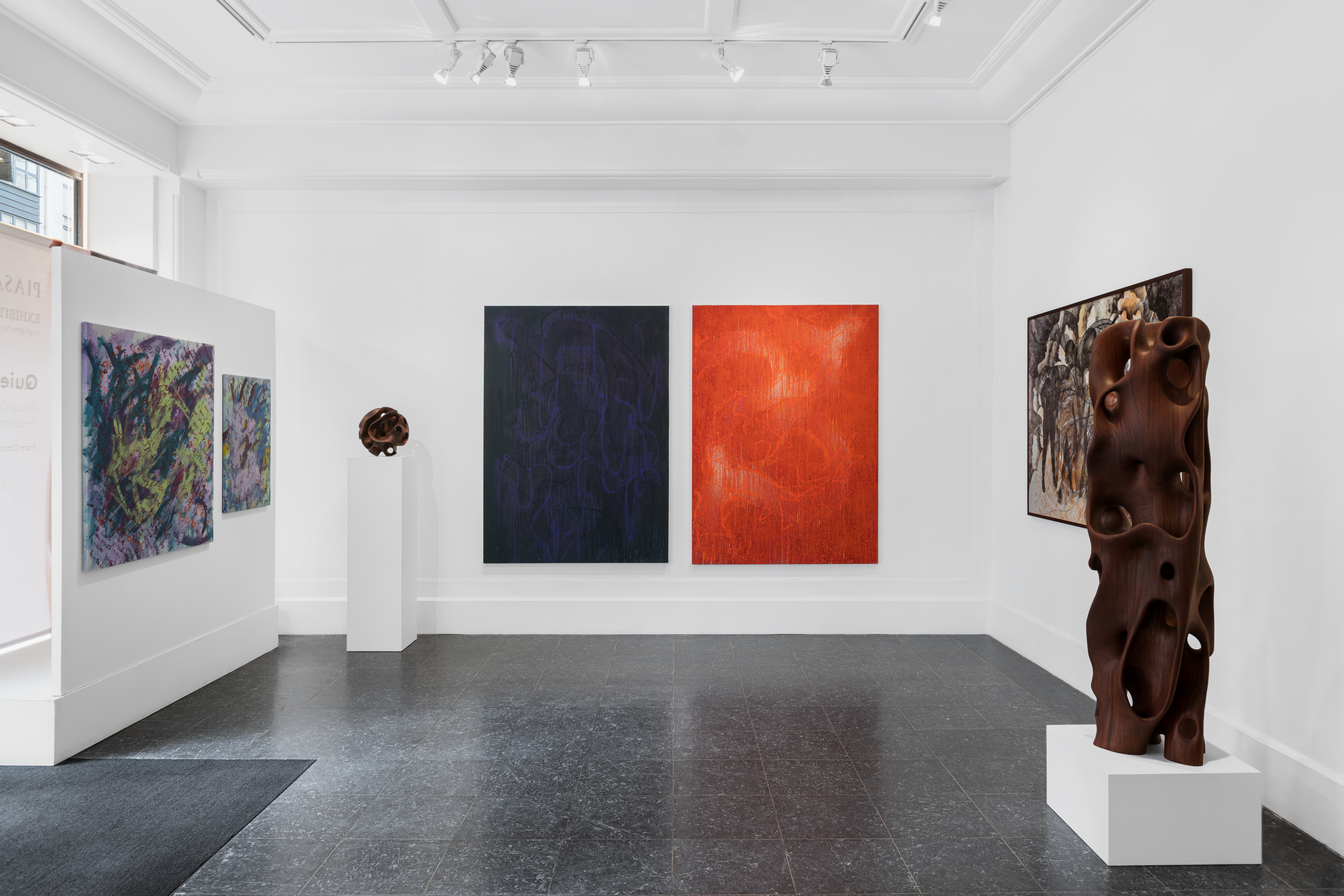 Installation view, Quiet Grounds, 2025, Tyburn Foundation.
LO: From your first acquisition to your most recent, how has your sense of what matters in an artwork evolved? And, if I may, do you remember the first artwork you ever purchased - and what drew you to it?
EM: The first artwork I purchased was by William Kentridge in the early 2000s. I was working as a lawyer in Johannesburg when the Constitution for a newly democratic South Africa had just been put into place and my country was engaged in a wide-ranging enquiry as to how to create an equitable society with human rights at its core. For me, art has always been most impactful when addressing pressing collective concerns, including environmental questions, social justice and global disparities.
Recently I bought works by Primrose Panashe Chingandu, Driaan Claassen, Michele Mathison and Mbali Tshabalala – all artists featured in Tyburn Foundation’s Exhibition in Paris in late October. These acquisitions are important to me as part of the Foundation’s long-term commitment to support our Residency Fellows.
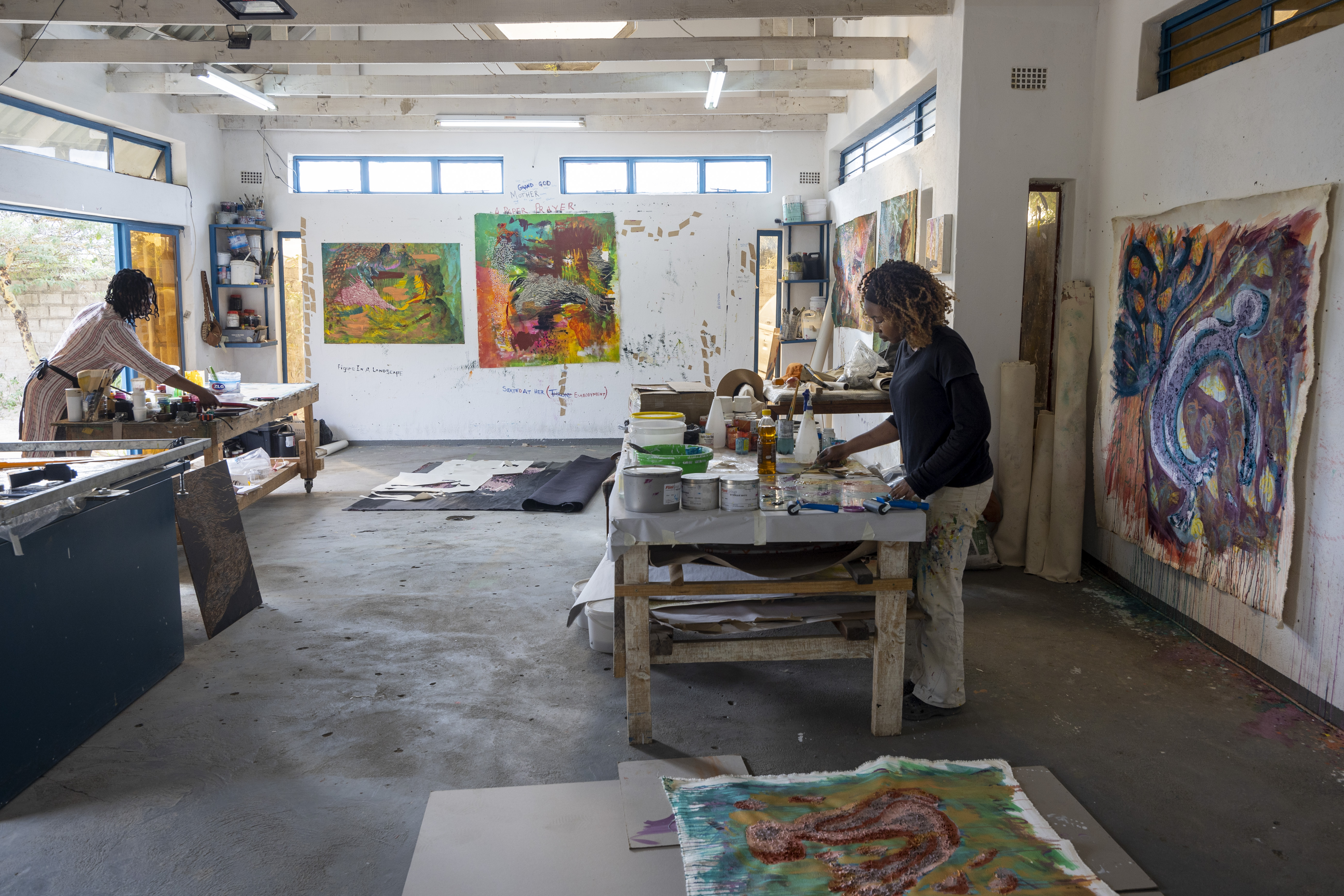 Primrose Panashe Chingandu and Mbali Tshabalala at Animal Farm Artist Residency, photo by David Brazier, courtesy Tyburn Foundation.
LO: The Foundation talks about creating a “nurturing global community.” What does that look like on a day-to-day level - how do you cultivate that sense of connection across borders?
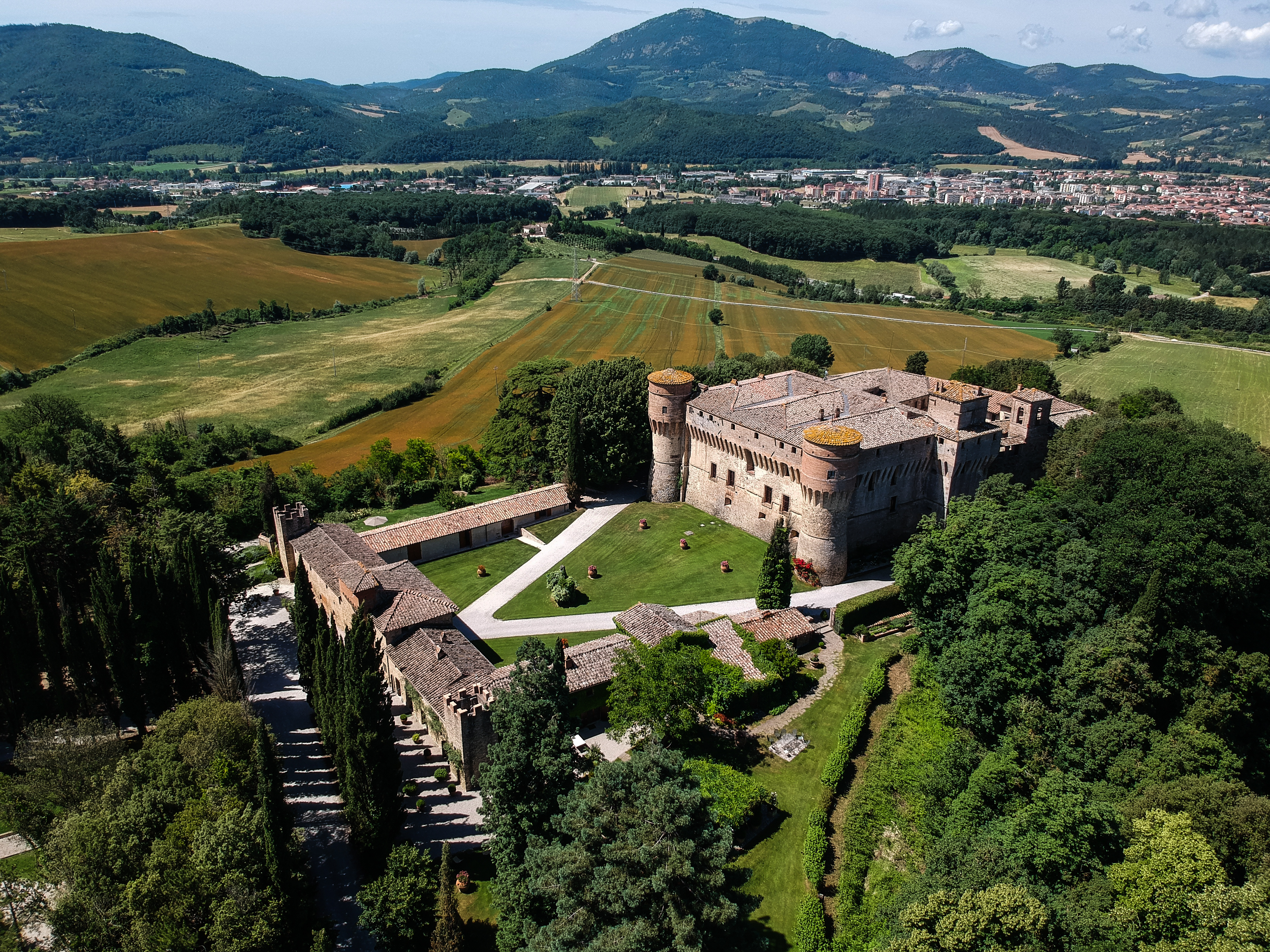
EM: Tyburn is different from most residency programmes in that we work internationally across Africa and Europe. We aim to bridge geographies with two of our residencies, La Foce and the Tyburn Foundation Affiliated Fellowship at Civitella Ranieri based in Italy and another, the Bridge Visual Arts Residency based at Animal Farm in Zimbabwe. The residency at Civitella is an international and multi-disciplinary residency programme which brings together cohorts of visual artists, composers, and writers from all over the world, offering an extraordinary opportunity for African artists to collaborate and form international networks across disciplines.
Tyburn works to offer visibility and validation for our artists outside traditional Western-centric circuits while still engaging critically within them. This approach allows us to highlight the multiplicity of creative voices shaping the contemporary moment and to engage in the reframing of how artistic excellence is understood. The Foundation seeks to contribute to a more sustainable ecosystem for African artists by offering artists opportunities to develop their practices outside the traditional commercial gallery model.
LO: As platforms like Latitudes work to connect artists from Africa and audiences worldwide, how do you see digital spaces fitting into the Foundation’s broader vision for global engagement and visibility?
EM: Digital platforms are no longer optional – they serve as vital infrastructure for global cultural participation.
For artists, digital platforms create access points which bypass geography, the limited resources of local art ecosystems and gatekeeping. Digital platforms amplify the visibility of emerging artists globally as curators and collectors increasingly discover early career artists online. Short form video is especially valuable as it facilitates the showcasing of process, personality and narrative, all of which are crucial for communicating artist identity.
For our Foundation, digital platforms help in increasing our reach, deepening our global engagement and creating sustainable channels for directing attention toward our artists, partnerships and mission. These platforms also facilitate our mentorship role in giving young artists enhanced access to fellow artists, curators and critics. A physical exhibition in any location can become a global event when paired with livestreamed artist talks, behind the scenes content, digital exhibition talks and online catalogues. Digital platforms ultimately help us to achieve a living archive of our residencies, artist development and exhibitions.
At the core of our ethos is a commitment to international partnerships, collaboration and the fostering of community networks, all of which are greatly facilitated by our strong, consistent digital visibility.
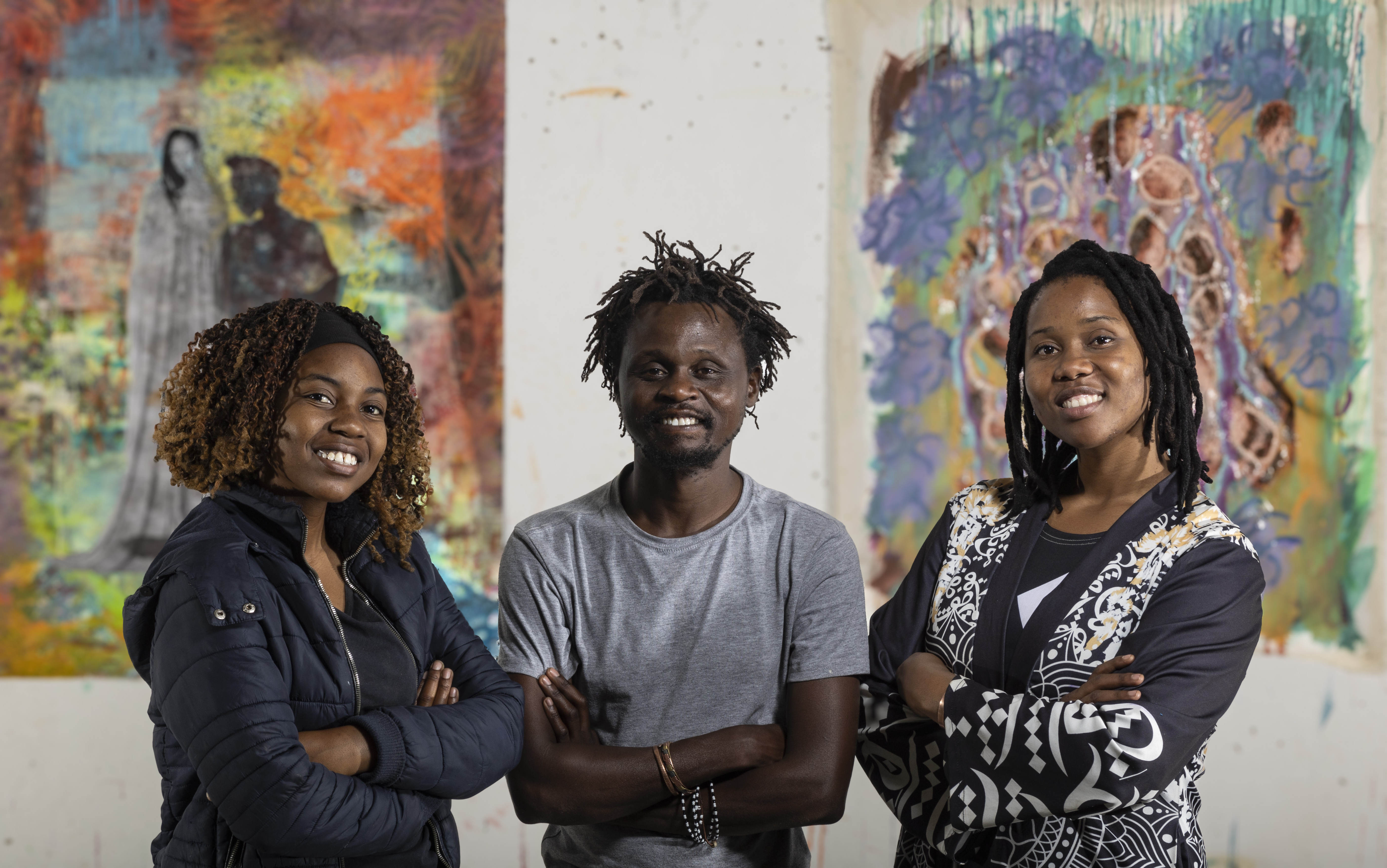 Primrose, Admire and Mbali at The Bridge Visual Arts Residency, photo by David Brazier, courtesy Tyburn Foundation.
Emma Menell picks her top three works on Latitudes

"Tony Gum’s work Umfazi, 2019, inspired yet distinct from self-portraiture, is a powerful work of visual storytelling, exploring identity, heritage and cultural norms."

"I love the work of the Ivorian artist, Rosalie Boka, which focuses on the preservation and protection of nature, inviting humanity to question its role in the destruction of the earth’s fauna and flora. In Transplantation, 202,5 the artist’s ecological concern is translated into an enigmatic image serving as an urgent call to action."

"I admire Choose Humanity, 2023, the work of Ina-Maria Shikongo, a Namibian environmental activist, who has worked to stop attempted fracking in the Okavango Delta, a world heritage site."
Selected Works in Residence:


Further Reading In Articles


African Artist Directory