

A tapestry of rich cultures
Putting pedal to the metal has seen Sello Letswalo make his mark while recalling the shacks that shaped his life from childhood, writes Mamelodi Marakalala
South Africa is known worldwide for its diversity in scenic naturescapes, wildlife that includes the Big Five, and cultures collectively known as the “rainbow nation”. Yet the reality of many everyday South Africans, entwined within the geography and biodiversity, is marked by compounded and imbalanced socio-economic patterns. One is the internal migration characterised by a flux of rural-urban movement, and experienced by the multiplex and traditionally rooted family of multimedia artist Sello Letswalo.
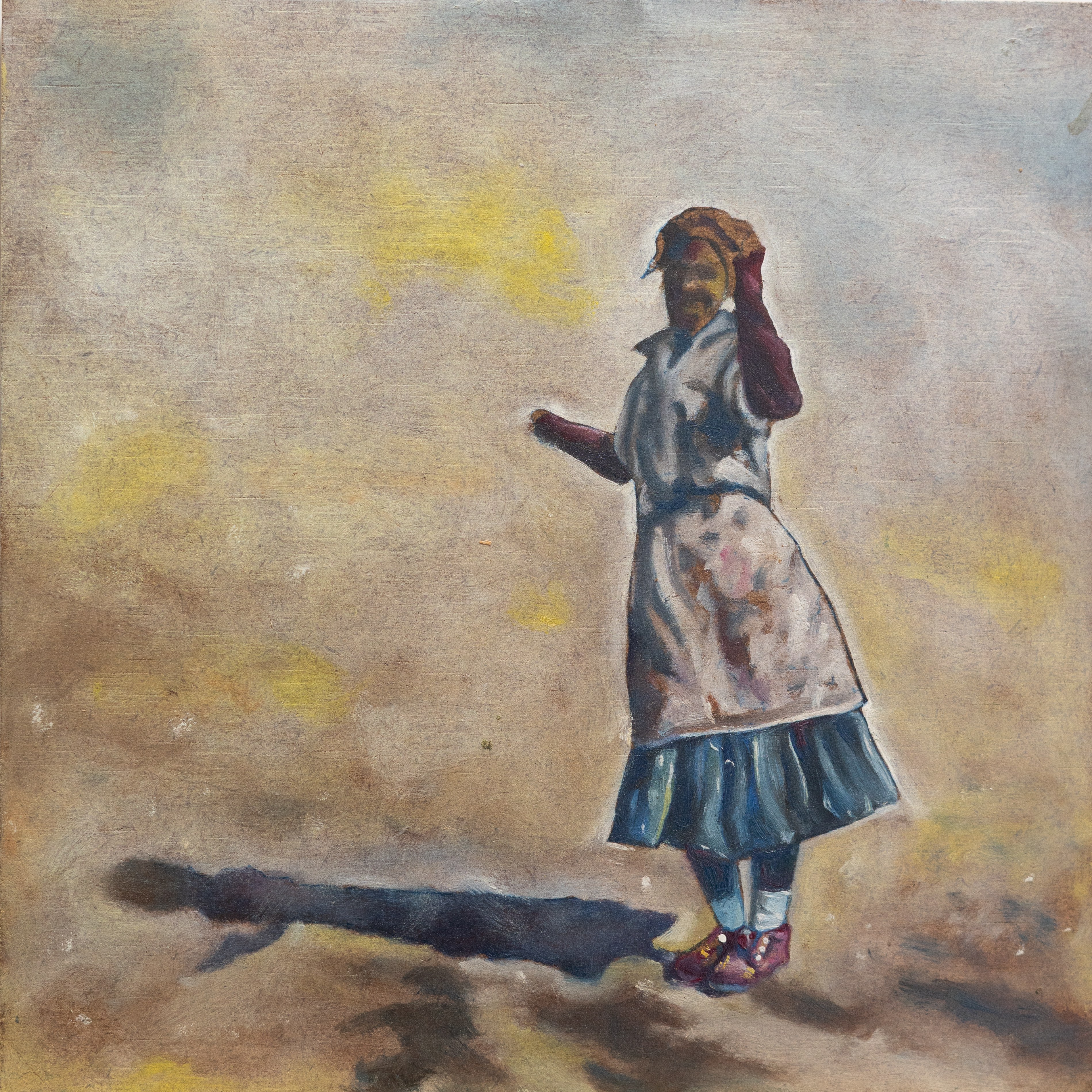
Karoo, 2022, Oil paint on MDF, 180 x 180 mm, Nando’s USA Collection
While growing up in Alexandra township, Letswalo used to visit his home province of Limpopo during the March and December holidays. When the time came for him, while studying towards a Visual Arts degree at the Tshwane University of Technology (TUT), to choose a medium that would define his art practice, he recalled the shacks that surrounded and shaped his life from childhood. These informal corrugated metal homes dominate places like Alex in this country. While they seem like squatters from a panoramic perspective, they shelter families and keep their dreams alive. In his mind, there is a significance in the lifespan of metals created to serve people and society.
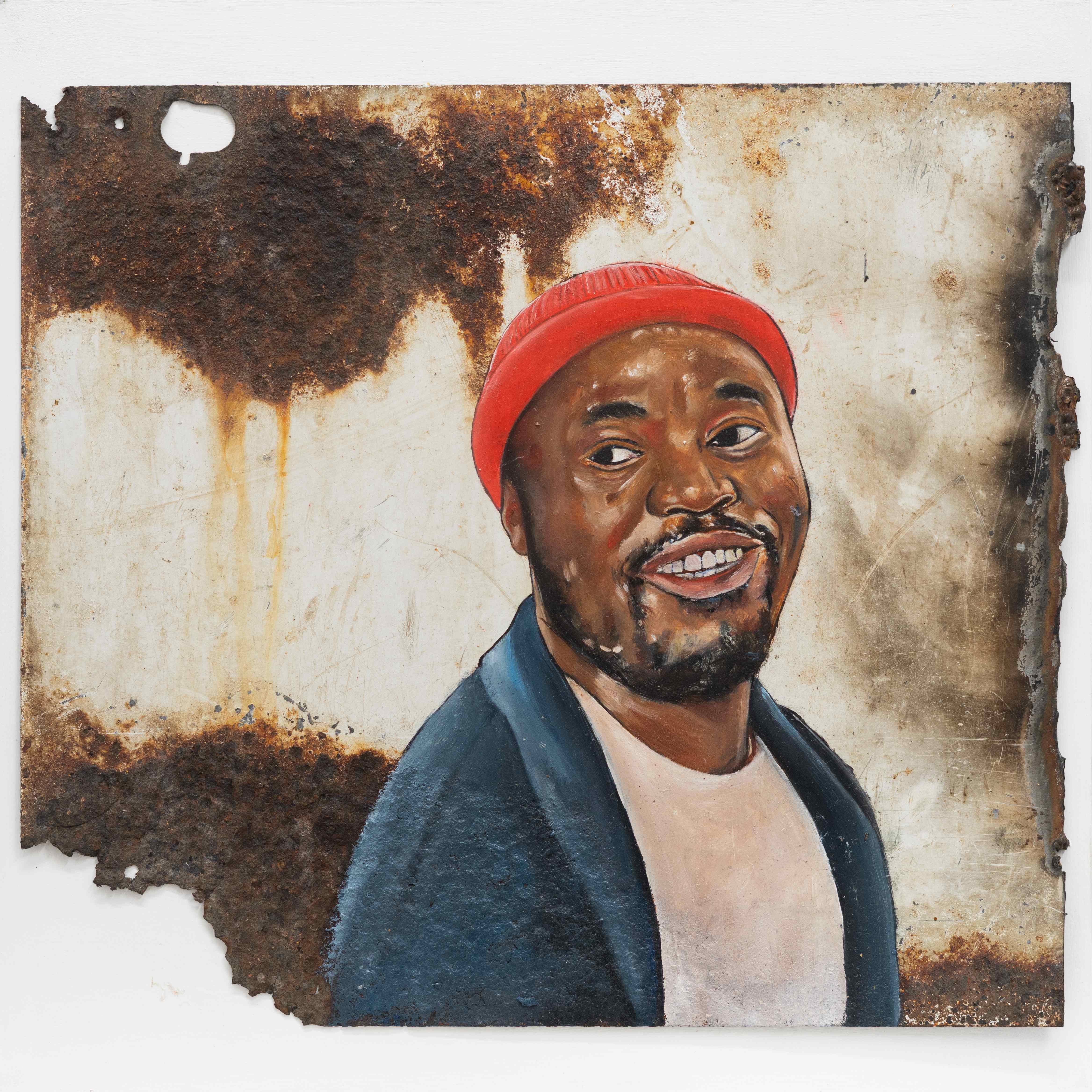
Pardon, 2024, Oil paint on steel alloy on MDF, 300 x 300 mm, Nando’s RSA Collection – New Market Alberton casa
“I don’t buy the metal sheets that end up becoming my canvas. I go out to search for used ones because they have a history. So I get most of my material from friends, neighbours, and even the nyaope addicts in our community who are always carrying recyclables,” he said. All the metal he finds comes with its own story. Like the old steel tray his next-door neighbours used to serve beers to customers who frequented their shebeen during the Apartheid era and a long while afterwards. What he admires most about his chosen material begins with its durability and ends with its ability to become another artefact and gain a different history.
Working with metal objects and steel sheets has been an endeavour for Letswalo, who has to involve chemicals and heat in his process. He also spent much of his earliest years as an artist figuring out which paints work well with the material and with each other to achieve the desired effects in his artworks.
It is important to him that people can see the completed piece, they’re looking at is a visual story rendered on metal. Strategies he employs to ensure this include leaving some of the space untouched, keeping rusts and dents that a sheet has accumulated over the years or during the flattening or treating, and not removing residues like melted plastic that landed on the sheet from the heating process.
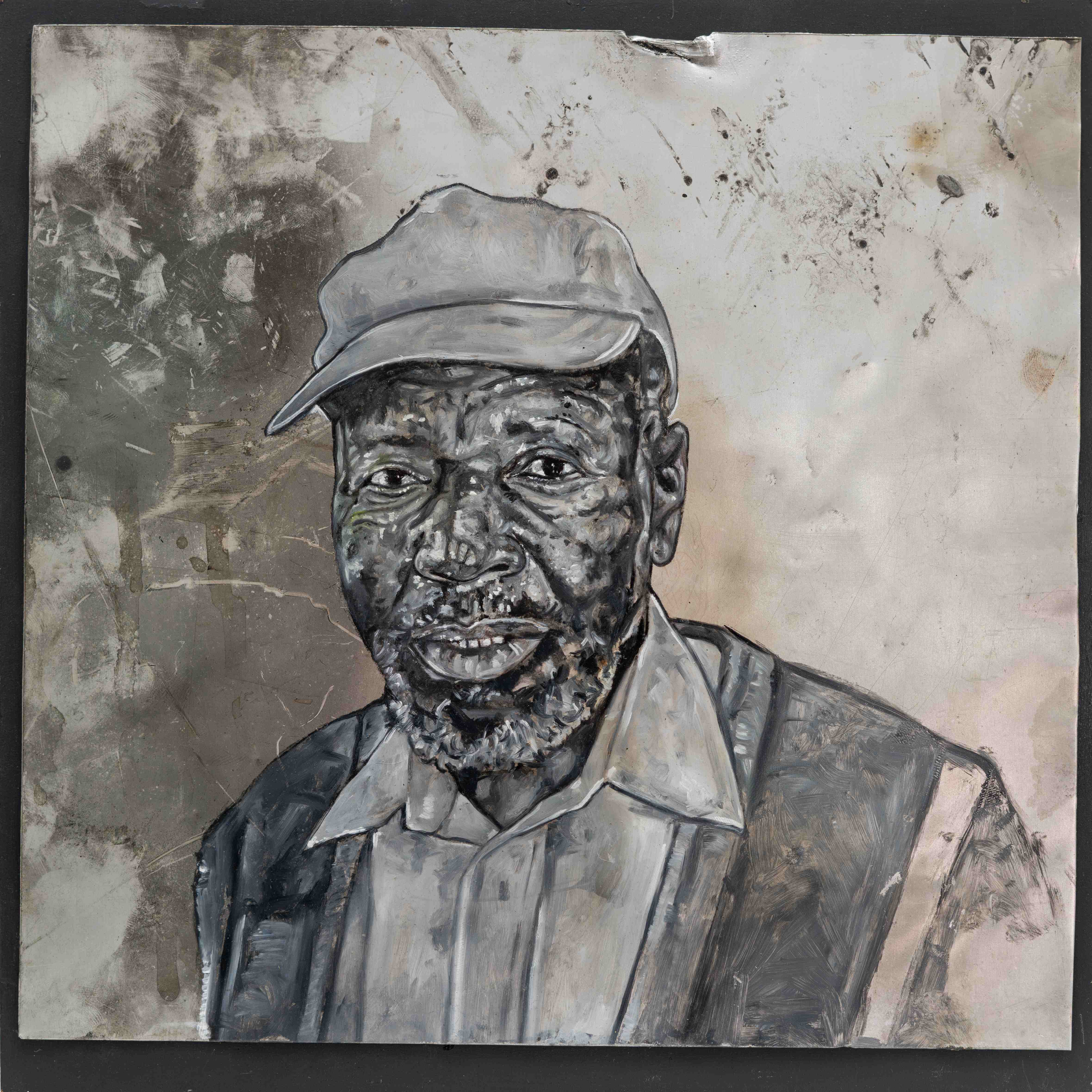
Melody, 2024, Oil paint on steel alloy on MDF, 300 x 300 mm, Nando’s UK Collection
Much like light reflects starkly on metal objects, Letswalo has reflected many facets of life in his and neighbouring corners of Africa through his intricate and technical art-making medium. This starts with African Creation Stories paintings that show his admiration for the cultures of the Indigenous KhoiSan South Africans, Ethiopians, Congolese, and Nigerians. Turning to the Sandra Portraits depicting the women in his community whose livelihoods are dependent on the domestic and service industries, including his mother and grandmother, he not only celebrates how hard they work for their families, but also protests the system that often exploits their socio-economic position, humility and strength, and calls for people to acknowledge their presence. Then, coming to the Kgomo Series, he explores the cultural practices of his family and their totem animal – the cow – in imaginative ways. The paintings present mostly feminine figures riding cows or with cow heads in the place where their faces should be.
These narratives ground his viewers in the waking experience of many Africans, from a tapestry of rich cultures to the jungle harbouring everyday adversities. Letswalo keeps his practice alive by engaging in initiatives aimed at supporting local artists, including the Bag Factory’s Artists’ Commission Programme and the Spier Arts Trust and Nando’s Creative Block Programme. This has allowed him to experiment with an array of ideas surrounding his core subject matters.

“I seek inspiration for my work rather than have it find me somehow. I go out of my way to speak with others and understand what they go through daily”
An example of this experimentation is in the clay sculptures he creates. Go Fihlela Toro ye e Lahlegilego/Reaching for Lost Dreams depicts a young man walking with a heavy makeshift bag slung over his shoulders. The idea of “lost dreams” rings even truer when you realise the boy’s baggage has replaced a school bag. It is said to reflect his own life and idealisations, having grown up in the township and working towards the “big dream” shared by many in Black communities. By sharing pieces of his world, Letswalo provides audiences with unfiltered visual narratives aimed at sparking conversations about real people and their struggles.
In the first half of this year, he was nominated and selected for the 2025 Nando’s Creative Exchange Programme, which now provides peer engagement and mentorship via various workshops and a regularly active WhatsApp group chat. We can look forward to the two shows he and other participants are working towards for 2026; to seeing how Letswalo’s explorations occupy the Union House and AVA Gallery spaces in Cape Town as he continues to fulfil his artistic intentions.


Further Reading In Articles


African Artist Directory